

Smartwatch Glass Polishing Machine: Fixtures, Crystal Materials and Safe Scratch Removal
Smartwatch glass polishing machine selection should start with the actual crystal and assembly, not the watch name alone. Mineral glass, strengthened cover glass and sapphire respond differently to polishing media. The fixture must also support a small surface without allowing rotation, edge loading or local heat.
This makes watch-glass work different from ordinary flat phone-screen polishing. A suitable process must preserve the crystal profile while reducing the visible defect. In many cases, a controlled improvement is safer than trying to remove every trace of a deep scratch.
Geometry and support
Why Watch Glass Is Not Simply a Smaller Phone Screen
Phone cover glass usually offers a broad, predictable working plane. Watch crystals present a wider range of shapes within a much smaller area. A crystal may be round, rounded-square, beveled, slightly domed or positioned below a raised bezel.
Those differences affect how the polishing pad reaches the surface. A large flat pad can distribute force across phone glass. On a watch face, the same type of contact may concentrate pressure near one edge or leave part of a curved surface almost untouched.
Compact Contact Area
Pressure and friction build across a smaller surface, so local heat can rise before the scratch changes visibly.
Sensitive Perimeter
Bevels and curved edges can lose material faster than the central optical area when pad contact is too soft.
Limited Clearance
Bezels, buttons, seals, speaker openings and decorative case surfaces may sit close to the working zone.
Pressure Must Follow the Supported Area
Machine pressure cannot be judged without considering the part of the crystal that the fixture actually supports. A watch module resting on two narrow edges behaves differently from a loose crystal seated across its full underside.
Even a small tilt matters. One raised corner reaches the pad earlier and begins losing material while the rest of the surface is still approaching full contact. Increasing pressure may make the contact pattern look broader, but it does not correct the uneven support beneath it.
The Visible Edge Is Part of the Finish
A scratch near the center is often easier to approach than one crossing a rounded perimeter. The central area allows the pad to work across a more stable plane. Near an edge, the pad may bend around the profile and remove material from the side as well as the top.
This can create edge roll. The perimeter begins to look softer, thinner or slightly wavy under reflected light. Once that shape changes, a finer polishing stage may improve gloss but cannot recreate the original geometry.
Complete Watches Need a Different Risk Review
A loose crystal provides direct access to the surface. A bonded display module adds adhesive, display layers and a larger structure beneath the glass. A complete watch also introduces case finishes, control buttons, openings and uncertain sealing.
These formats should not enter the same fixture automatically. The assembly condition determines how support is built, how residue is controlled and whether a wet process remains reasonable.
Material judgment
How Crystal Material Shapes Smartwatch Glass Polishing Machine Selection
Material is the first major process boundary. Mineral glass can respond to a conventional glass-polishing system, while sapphire generally needs a diamond-compatible medium. Strengthened cover glass and coated surfaces introduce their own limits.
The target polishing machine for phones and watches is presented for phone screens, watch faces and selected glass surfaces. The product information also separates sapphire polishing from standard cerium-oxide work and notes that different models may require different fixtures. Sample compatibility still needs confirmation before routine processing.
Mineral Glass Can Respond Quickly
Mineral watch glass may respond well to a fine glass-compatible compound. That responsiveness can be useful for light surface marks, although it also means the surrounding area may change faster than expected.
A flat central scratch usually offers a more stable case than damage beside a bevel. Near the perimeter, even a modest amount of pad compression can increase removal around the edge. The visible improvement should be evaluated together with the reflected shape of the complete crystal.
Surface coatings can complicate the judgment. Worn coating may appear as haze, color shift or a group of fine scratches. If the defect sits mainly inside the coating, polishing one small area can create a clearer patch that looks less uniform than the original mark.
Strengthened Cover Glass Needs Profile Control
Strengthened cover glass is designed to resist damage during normal use, but polishing still removes surface material. A shallow cosmetic line may become less visible. A deeper line may require more surrounding removal than the optical surface can tolerate.
Curved edges create the main concern. The transition between the flatter center and the rounded perimeter can receive uneven contact. When the pad follows that transition too aggressively, the outer zone changes before the central defect has been reduced enough.
Some covers also include printed borders or functional surface treatments. Their presence should be considered before polishing begins. A process that improves clear glass may alter the appearance of a treated or decorated area.
Sapphire Requires More Than a Harder Abrasive
Sapphire is much harder than common watch glass. A standard glass compound may create friction and heat while producing little useful change. A compatible diamond-based medium is normally required for meaningful cutting.
Hardness does not make the crystal immune to process damage. A deep scratch can demand substantial removal across the surrounding surface. On a domed crystal, that removal may flatten one zone. Beside a bevel, it may soften the edge or change how light moves across the face.
Sapphire may also carry anti-reflective treatment. A visible mark inside that layer does not behave like damage inside the crystal itself. When coating location is uncertain, a test sample is more useful than a stronger polishing cycle.
Unknown material is a process risk, not a minor missing detail.
Replacement crystals may differ from the original specification. When reliable material information and a sacrificial sample are both unavailable, direct polishing can create irreversible haze, heat or profile change.

Representative watch samples help define the fixture and test route, but appearance alone does not confirm whether a crystal is mineral glass, strengthened glass or sapphire. Material identification should come from reliable model information or sample validation.
Review Watch Polishing ApplicationSmall-part support
What a Suitable Watch Polishing Fixture Must Control
A good fixture does not simply clamp the watch in place. It creates a stable optical plane and keeps that plane unchanged during contact. It also prevents rotation, supports fragile boundaries and keeps the pad away from vulnerable case surfaces.
These functions matter more on watch glass because the entire surface is close to the fixture edge. A small amount of movement can change where the pad cuts. Excess clamping cannot compensate for poor support and may introduce stress into a bonded module.
Level Seating
The crystal should meet the pad evenly instead of touching through one raised corner.
Anti-Rotation Support
Round crystals need positive location because polishing friction can turn the part inside a loose recess.
Edge Exposure
The pad must reach the optical area without wrapping around the perimeter or contacting the bezel.
Underside Clearance
Connectors, sensors, buttons and projecting components should not carry polishing load.
Fit Is More Important Than Clamping Force
A fixture with a loose outline allows the sample to move as friction changes. Tightening the clamp may stop visible movement, but it can flex the assembly or mark the case. Accurate reference surfaces offer a more stable solution.
Replaceable inserts are useful when several watch shapes enter the same workflow. One fixture base can then accept round, rounded-square or model-specific supports. Each insert still needs its own contact check because similar dimensions do not guarantee similar underside geometry.
Soft Support Must Still Hold the Optical Plane
Soft contact material can protect a finished case, but too much compression allows the sample to tilt. Very hard contact can maintain position while increasing the chance of marks or concentrated pressure.
The support material should protect the assembly without behaving like a cushion. When the sample is removed and mounted again, it should return to the same height and orientation.
Fixture Design Also Controls Residue
Wet polishing can leave slurry around a bezel, adhesive line or fixture recess. The support should allow liquid to leave the active area instead of collecting beside the crystal.
Dry compound creates another problem. Powder and wax residue can remain inside corners and return to the surface later. Simple, accessible fixture shapes are easier to clean than deep recesses with narrow particle traps.
A useful fixture test answers one question:
Does the same crystal produce the same contact pattern after it is removed and mounted again? If the active area changes between mountings, routine polishing will not remain consistent.
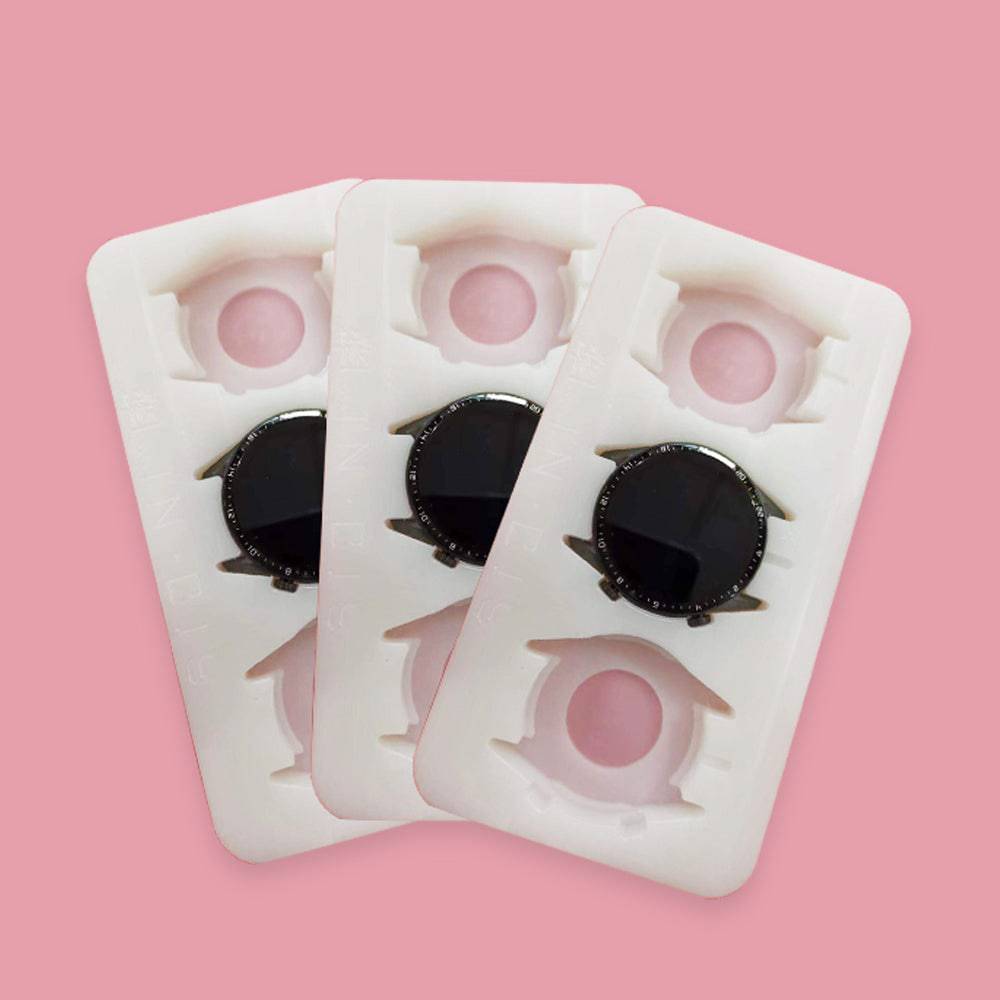
A model-specific watch polishing mold shows why fixture geometry matters: the support must locate the watch consistently while leaving the intended optical area available to the polishing pad.
View Watch Polishing MoldProcess choice
Choosing Between Wet Polishing and Dry Polishing
Wet and dry polishing are not competing versions of the same process. Each changes the way heat, debris and abrasive reach the surface. The assembly and material should decide which route deserves testing.
Wet Polishing
Liquid helps carry removed material away and can support cooling when delivery remains stable.
The main concern is liquid entry around bezels, buttons, seals, openings and adhesive lines. Slurry condition and final cleaning also influence the result.
Dry Polishing
Dry work avoids water and may suit compatible wax-based finishing or water-sensitive assemblies.
Heat can rise quickly, while dust and compound may enter narrow gaps. Short contact periods and complete residue removal become essential.
Wet Polishing Depends on Controlled Liquid Delivery
More liquid does not automatically produce a safer surface. Excess flow can hide the contact area and move slurry into parts of the assembly that are difficult to clean. Weak flow can allow abrasive to dry against the crystal.
Slurry must also remain consistent. Settled abrasive, contamination or changing concentration can alter removal behavior during the same sample group. A clean compound and stable supply are more important than extending the cycle.
Dry Polishing Depends on Heat Discipline
Small watch crystals can heat rapidly because the working area is compact. A dry compound may continue generating friction even when scratch reduction has slowed.
Rising temperature should be treated as a process warning. Stronger pressure is rarely the right response when the surface remains unchanged. The material assumption, pad and medium deserve review instead.
Pad Hardness Changes Edge Behavior
A soft pad can follow a curved crystal, but it may also bend around the edge and remove material from the perimeter. A harder pad maintains a flatter plane, although its contact area can become too small on a dome.
Pad selection should follow the surface profile rather than the device category. Flat mineral glass, curved strengthened glass and domed sapphire may all need different contact behavior even when their visible dimensions are close.
Keep Sapphire and Common Glass Consumables Separate
Diamond particles can remain inside a pad or handling tool after sapphire work. When that contaminated surface later contacts softer glass, it can introduce new micro-scratches.
Dedicated pads, containers and cleaning tools reduce this risk. Clear labels and separate storage are simple controls, especially when phone and watch work share the same machine area.
Optical quality
Reducing Scratches Without Creating a Larger Defect
A polished crystal should not be judged only by whether the original scratch disappeared. The surrounding surface must remain clear, evenly shaped and visually consistent from the center to the edge.
This is where over-polishing becomes costly. A line may become lighter while haze, optical waves or an uneven perimeter become more visible. The final result is then technically smoother but visually worse.
Edge Roll
The perimeter loses more material and begins to look rounded or wavy.
Local Heat
Friction affects coatings, adhesive and bonded display structures before the surface looks different.
Haze
Contamination, dried slurry or an unsuitable medium leaves a cloudy patch under angled light.
Optical Waves
Uneven material removal bends reflected lines even when the surface remains glossy.
Angled Light Reveals What Overhead Light Misses
Diffuse light is useful for general clarity, while a small angled light exposes haze and fine polishing marks. A straight-line reflection or printed grid can reveal waves across the surface.
Domed crystals should be compared with an untreated sample of the same shape whenever possible. Their curvature is part of the optical design. A locally flattened zone changes how reflections move, even when it remains difficult to see from directly above.
A Safe Stop Point May Leave a Faint Line
Deep scratches encourage longer polishing because the remaining mark is easy to follow. Yet each additional pass removes more material from the surrounding area, not only from the defect itself.
A faint line visible only under strong inspection light may be an acceptable result. It can preserve the edge, coating and original curvature. Complete removal should not be promised before the real crystal has been tested.
Some Defects Belong Outside the Polishing Process
Cracks, impact pits and structural edge chips are not ordinary surface scratches. Polishing cannot restore the missing strength, and mechanical contact may enlarge the damage.
Display lines, touch faults, flicker and internal dark areas also need another repair route. Severe coating damage can be equally unsuitable because a small polished patch may make the complete surface look uneven.
Polishing should pause when:
- A crack or chip reaches the structural edge.
- The visible defect changes with display content or touch pressure.
- Material and coating cannot be identified.
- The assembly has uncertain sealing or previous opening damage.
- Scratch removal would require major profile change near a curved edge.
Equipment planning
When One Platform Makes Sense for Phone and Watch Work
A shared polishing platform can be practical when both phone panels and watch crystals appear in the same workflow. The machine may be shared, but the fixtures, pads, compounds and process records should remain clearly separated.
The broader phone polish machine collection provides related equipment options for different polishing workloads. The right configuration still depends on actual sample dimensions, material mix and batch structure.

One polishing platform can support mixed phone and watch work, but fixtures, pads, polishing media and process records still need to be separated by sample type.
View Machine DetailsThe Real Workload Includes Changeovers
Ten identical phone panels can use one stable setup. Ten different watch models may require several fixture changes, alignment checks and cleaning stages. Machine cycle time alone does not represent practical output.
Capacity planning should include intake inspection, masking, mounting, polishing, cleaning, final review and consumable changeover. Watch work often spends more time around the machine than inside the active polishing stage.
A Fixture Library Improves Mixed-Model Consistency
Frequently processed models may justify dedicated inserts. Less common shapes can use sample-specific supports when their geometry has been validated.
Each insert should be easy to identify and clean. A simple record can connect the fixture with accepted sample types, pad family and material route. This avoids relying on memory when different operators or sample groups use the same machine.
This Configuration Is Most Useful When
Phone and watch samples regularly enter the same polishing area, but their fixtures can remain separated.
Several watch shapes require interchangeable inserts rather than one universal clamp.
Mineral glass and sapphire need dedicated polishing media and contamination control.
Representative samples can be tested before a regular process and output plan are approved.
Purchasing preparation
What to Submit Before Fixture and Process Selection
A useful equipment discussion begins with the real samples expected in production. Model names and general phrases such as “watch scratches” do not explain the material, geometry or assembly risk.
Photographs should show the complete crystal, the defect under angled light and the side profile. Dimensions should describe the visible working surface rather than the complete case alone.
Sample Structure
- Watch brand and exact model
- Complete watch, display module or loose crystal
- Visible width, length or diameter
- Flat, beveled, curved or domed profile
Material and Defect
- Mineral, strengthened, sapphire or unknown
- Original or replacement crystal
- Scratch location and visible depth
- Coating wear, haze, chips or cracks
Process and Output
- Existing fixture, pad and compound
- Wet, dry or open-to-testing route
- Expected daily or weekly quantity
- Acceptable residual scratch visibility
Representative Samples Matter More Than an Easy Sample
A shallow central scratch may produce a promising test but reveal little about the difficult work expected later. A useful sample group should include common materials, one typical edge defect and the assembly formats that appear most often.
This does not mean testing damaged parts that are clearly unsuitable. Cracked crystals and structural chips belong outside normal polishing validation. The aim is to test realistic surface defects without using an unrepresentative easy case.
Define the Acceptable Finish Before the Test
“No scratch” is not a complete quality standard. The final review should also include haze, reflected-line shape, edge profile, coating appearance, residue and assembly function.
The acceptable inspection condition should be clear. A faint line visible only beneath a strong angled lamp is different from a defect visible during normal viewing. Without this distinction, testing can continue beyond the safest stop point.
The Final Recommendation Should Cover the Complete Route
Machine selection is only one part of the decision. The technical recommendation should also identify the fixture approach, pad type, polishing-medium family, wet or dry direction, cleaning method and inspection points.
Operating settings, supported dimensions and process time should come from the actual equipment configuration and sample test. Unconfirmed numbers should not be copied from another machine or glass type.
Frequently asked questions
Watch Glass Polishing FAQ
Can sapphire watch crystals be polished?
Sapphire can be polished with a compatible diamond-based medium and a suitable pad. Coating condition, edge shape, scratch depth and heat may still limit the result. A representative sample should confirm the route.
How should a watch polishing fixture be selected?
Fixture selection should follow the exact crystal outline, underside structure, assembly condition and edge profile. The support must hold the sample level, prevent movement and control edge exposure.
When should a deep scratch not be polished?
Polishing becomes unsuitable when the required removal would change a bevel, flatten a curved area, create optical waves or threaten a coating. Cracks, impact pits and structural chips also need another repair route.
Does polishing restore the original coating?
Polishing may reduce or remove oleophobic or anti-reflective layers. Coating restoration is a separate process and should not be assumed suitable for every crystal or bonded assembly.
Sample-based selection
Request a Fixture and Polishing Route Recommendation
Submit the watch model, crystal material, visible surface dimensions, assembly condition, defect photographs, expected process and daily quantity. Existing fixtures, pads, compounds and previous polishing results can also support the technical review.
A useful recommendation should connect the machine with the fixture, pad, polishing medium, wet or dry route, cleaning method and inspection standard. This provides a clearer basis for mixed phone-and-watch work than choosing equipment from the device name alone.