


In modern display refurbishment and module assembly, lamination decides both clarity and yield. Therefore, a stable lamination process protects thin glass, keeps adhesives uniform, and reduces rework. In that context, LCD Laminating Machine setups help build a cleaner finish by controlling pressure, alignment, and vacuum conditions. Moreover, well-managed lamination supports consistent light transmission and reduces visual artifacts. As a result, production lines can focus on repeatability instead of constant defect correction.

Vacuum lamination platform supports stable film-to-glass bonding and clean alignment.
How LCD lamination works in practice
First, lamination joins multiple optical layers into one stable stack. Typically, the stack includes a cover glass, an optically clear adhesive layer, and an LCD or touch module. In addition, some workflows add a polarizer film or protective film depending on the design.
Next, lamination begins long before the press cycle. Cleaning removes particles, oils, and static-charged debris that can hide as “tiny bubbles” later. Meanwhile, surface preparation sets the stage for uniform wetting, which reduces edge lift over time.
Then, alignment defines the final visual quality. A small offset can cause light leakage at edges or overlap marks near bezels. For that reason, many setups use fixtures or molds to keep placement repeatable across batches.
After alignment, vacuum evacuation removes trapped air paths. Consequently, the adhesive layer can contact glass and display surfaces evenly. In contrast, a fast clamp without adequate evacuation often locks bubbles in place.
Finally, pressure and temperature finish the bond. Heat softens adhesive flow and stabilizes viscosity within a workable window. As a result, pressure spreads the adhesive uniformly and limits localized stress.
The key roles of vacuum, pressure, and temperature
To start, vacuum reduces the chance of air entrapment at micro-textures. Additionally, vacuum helps prevent “bubble trails” that follow dust or scratches. In other words, vacuum creates the conditions for smooth optical contact.
At the same time, pressure decides thickness uniformity. A stable press cycle avoids thick corners and thin centers. Consequently, it also reduces Newton-ring patterns that appear when gaps vary across the surface.
Moreover, temperature supports predictable adhesive behavior. When temperature stays consistent, adhesive flow remains steady. Therefore, bonding quality becomes less sensitive to minor timing differences between cycles.
Why lamination systems use structured motion and control
In many workflows, structured motion limits sudden shear forces. For example, a flip-table or guided platform can place film with fewer wrinkles. As a result, the film stays flat and avoids trapped channels.
Likewise, touch-screen control and repeatable settings reduce variation across operators. Once parameters remain stable, defect analysis becomes simpler. Consequently, improvements come from process learning instead of guesswork.
Technical note: some listed systems describe panel-size capability around 500×700 mm and short cycle timing per piece.
Benefits that matter: clarity, yield, and long-term stability
First, optical clarity improves when adhesive thickness stays uniform. Clear lamination reduces haze and keeps contrast strong under backlight. Therefore, text edges and fine lines remain crisp after assembly.
Second, lamination supports higher yield by reducing rework loops. Fewer bubbles and fewer dust points mean fewer repeat cycles. As a result, throughput increases even when inspection standards stay strict.
Third, stable bonding reduces edge failures over time. When the adhesive spreads evenly, stress concentrates less at corners. Consequently, the stack resists delamination during thermal cycling and vibration.
Fourth, controlled lamination protects delicate display modules. A balanced cycle can limit pressure spikes and prevent panel warping. In addition, it helps preserve connector regions and flexible tail areas.
Practical outcomes seen on the line
-
Cleaner appearance under bright inspection: fewer micro-bubbles and fewer “sparkle” points.
-
Lower rejection rate during final QC: fewer defects migrate into packaging stages.
-
More consistent touch behavior: uniform bonding reduces local pressure zones.
-
Better edge cosmetics: fewer lifting edges and fewer visible glue lines.
Meanwhile, consistent lamination supports stable training and documentation. A standardized process makes it easier to audit changes. Therefore, parameter tuning becomes a controlled improvement cycle.
Why “bubble-free” also means “stress-managed”
Bubbles often signal uneven wetting or trapped air routes. However, stress often explains why bubbles reappear after initial success. For that reason, lamination should manage both air removal and mechanical loading.
In addition, stress-managed lamination reduces micro-gaps. Micro-gaps scatter light and create shimmering defects. As a result, the finished stack looks cleaner under multiple viewing angles.
Where these machines fit best
First, small-format display refurbishment benefits from fast, repeatable film application. Phone and handheld panels often need careful alignment near tight bezels. Therefore, consistent positioning can reduce cosmetic waste.
Next, tablet and notebook panels gain from stable large-area bonding. Larger diagonals increase the risk of trapped air pockets. Consequently, vacuum control becomes more important as surface area grows.
Then, industrial panels demand strong reliability under heat and vibration. HMI screens, rugged terminals, and instrument clusters often face long duty cycles. As a result, stable bonding supports longer service life.
Finally, specialty displays in labs and development lines value flexibility. Prototype work changes film types and thickness more often. Therefore, adjustable settings and quick changeovers can save time.
Scenario examples that often need strong lamination control
1) Refurbishment and rework lines
Moreover, refurbishment lines prioritize repeatability and defect control. Each panel can arrive with slightly different tolerances. As a result, a stable lamination approach reduces “one-off” fixes.
2) Pilot production for new modules
In pilot phases, process windows still evolve. Therefore, controllable pressure, vacuum timing, and temperature help map stable ranges. Consequently, scale-up becomes smoother.
3) Multi-panel batching on larger beds
When a platform holds multiple small panels, layout matters. Additionally, uniform pressure distribution matters even more. As a result, fixtures and spacing rules become part of the lamination recipe.
Materials and layering choices
First, lamination performance depends on film type, adhesive chemistry, and surface energy. A strong machine still needs compatible materials. Therefore, selection should start from the stack design, not only from equipment.
Next, OCA film (optically clear adhesive film) offers consistent thickness and predictable flow. It supports clean optical performance when surfaces are flat and well-prepared. In addition, it helps reduce messy dispensing steps.
Meanwhile, LOCA (liquid optical clear adhesive) can suit certain gap-filling needs. It can address uneven surfaces when controlled well. However, it adds curing steps and handling sensitivity.
Moreover, polarizer films demand careful handling because they scratch easily. A clean workspace and stable placement reduce the risk of crease marks. Therefore, lamination should minimize sliding during contact.
Typical layer stacks and what each needs
Glass + OCA film + LCD
-
First, it needs strong surface cleanliness and controlled pressure.
-
Then, it benefits from vacuum evacuation to avoid edge bubbles.
Glass + polarizer film + LCD
-
Next, it needs careful alignment because polarizer rotation matters.
-
Also, it benefits from low-shear contact to avoid stretch lines.
Film + rigid board or film + film
-
Meanwhile, it needs tension control to prevent warping.
-
Consequently, guided transfer and steady roller contact can help.
Matching adhesive flow to the cycle window
To begin, adhesive viscosity changes with temperature. Therefore, lamination temperature should match film specifications and shop conditions. In addition, stable warm-up time supports repeat results.
Then, pressure must match stack stiffness. Thin glass stacks need smoother ramps. As a result, controlled pressure profiles can reduce crack risk.
Finally, vacuum timing should match surface geometry. Textured surfaces trap air more easily. Consequently, longer evacuation and staged contact can prevent persistent micro-bubbles.
Pairing equipment for a complete, cleaner workflow
First, lamination rarely works alone. A complete line typically adds cleaning, alignment tooling, and de-bubbling support. Therefore, pairing decisions should focus on defect prevention, not only speed.
Next, surface cleaning tools matter more than expected. Particle counts and static control influence bubble rates directly. As a result, ionizing airflow, lint-free wipes, and stable cleaning chemistry improve yield.
Meanwhile, molds and fixtures stabilize alignment. They reduce operator-dependent shifts and keep edges consistent. Consequently, inspection becomes easier because defects show consistent patterns.
In addition, bubble removal equipment can rescue borderline bonds. It can reduce micro-bubbles that survive initial vacuum steps. Therefore, pairing lamination with de-bubbling increases consistency.
Also, compressed air and vacuum supply quality affects stability. Clean, dry air prevents condensation and contamination. As a result, pneumatic parts and seals last longer.
For a broader view of available tooling categories and production equipment, the Jiutu Store homepage can serve as a central reference point for line planning without mixing unrelated product types.
A practical pairing checklist
-
Before lamination: cleaning, inspection lighting, static control.
-
During lamination: fixtures, controlled motion, repeatable parameters.
-
After lamination: inspection, de-bubbling, edge check, curing if needed.
Moreover, pairing should reflect throughput goals. High mix lines need faster changeover. In contrast, stable high-volume lines need robust automation and low drift.
Choosing the right machine configuration
First, format size drives the entire selection. A platform should cover the largest intended panel with practical margins. Therefore, bed size should match both current needs and near-term expansion.
Next, alignment method matters as much as vacuum strength. A system with stable positioning reduces scrap from minor offsets. As a result, lines spend less time on cosmetic rework.
Then, control features influence repeatability. Touch-screen settings and stored recipes help keep parameters stable. In addition, they support consistent troubleshooting across shifts.
Moreover, cycle timing affects throughput planning. Some listings describe short per-piece lamination timing and large-panel capability, which can support higher daily output when fixtures are ready.
Size, pressure, and vacuum: the three core fit checks
1) Size fit
-
First, confirm maximum diagonal and usable lamination area.
-
Then, check fixture clearance for bezels and connector areas.
2) Pressure capability
-
Next, match pressure range to glass thickness and adhesive type.
-
Also, confirm pressure uniformity across the bed.
3) Vacuum system design
-
Meanwhile, confirm evacuation speed and seal integrity.
-
Consequently, stable vacuum reduces bubble recurrence after release.
Small-format vs large-format setups
Small-format systems often prioritize compact footprints and quick tooling swaps. In addition, they can suit frequent model changes. Some compact laminator listings mention built-in vacuum support and smaller-screen focus, which aligns with this use case.
Large-format systems focus on bed stability and pressure distribution. Therefore, frame rigidity and platen flatness matter more. As a result, large-panel lamination often benefits from staged vacuum and controlled heating.

Flip-table mechanics help keep film placement steady during transfer and pressing.
Process thinking for bubble-free results
First, bubble-free results start with contamination control. Dust, fibers, and micro-scratches form air channels. Therefore, cleaning and handling discipline directly affect optical yield.
Next, adhesive handling matters because film edges can trap air. A consistent peel angle and stable placement reduce edge tunnels. As a result, the press cycle has fewer defects to “fix.”
Meanwhile, staged contact can prevent large bubble formation. Touching down one edge first and rolling contact across the surface can reduce trapped volume. Consequently, vacuum has less work to do.
In addition, temperature should stabilize before production starts. Warm-up drift can shift adhesive flow behavior. Therefore, a stable thermal baseline helps maintain repeatability.
A practical, neutral workflow sequence
-
Pre-clean and inspect surfaces under bright light.
-
Stage materials to reduce moisture and temperature shock.
-
Align using a fixture and confirm edge references.
-
Evacuate air paths under vacuum before full pressure.
-
Press with controlled ramp and hold time.
-
Inspect immediately, then re-check after a short rest period.
Moreover, inspection should look for repeat patterns. A pattern often points to a root cause. As a result, fixes can target the correct stage.
Inspection conditions that reveal hidden issues
Bright, even lighting shows haze and micro-bubbles more clearly. Additionally, angled light reveals edge lift and glue-line variations. Therefore, a consistent inspection station improves decision quality.
 Bright inspection conditions make micro-bubbles, dust, and edge lift easier to spot.
Common symptoms and process-focused fixes
First, troubleshooting should start with “what changed recently.” Therefore, film batch, cleaning chemistry, humidity shifts, and vacuum seals should be checked early. Moreover, returning to a known baseline often resolves drift quickly.
Next, stable fixes should remove the cause rather than mask it. However, quick compensations can create new defects. Consequently, one change per trial keeps learning clear.
| Symptom | Likely cause category | Process-focused fix |
|---|---|---|
| Edge microbubbles | dust at edges, early sealing, uneven contact | First, improve staging cover; then, standardize contact direction and speed |
| Large bubbles after press | leak, short evacuation, sudden contact | Next, verify seals and evacuation time; then, slow the first contact segment |
| Patchy haze | residue, moisture, incomplete wet-out | Meanwhile, validate wipes and chemistry; then, increase controlled dwell time |
| Wrinkles | tension drift, handling inconsistency | Additionally, add tension cues and fixtures; then, reduce manual correction moves |
| Misalignment drift | film stretch, unstable referencing | Finally, simplify alignment references; then, stabilize tension handling |
Maintenance practices that protect consistency
First, mechanical stability keeps lamination predictable. Loose guides and worn rollers introduce hidden variation. Therefore, scheduled inspection should focus on motion parts and contact surfaces.
Next, vacuum seals and filters deserve routine attention. Small leaks reduce effective evacuation and increase bubble rates. Consequently, a simple leak check can prevent long troubleshooting sessions.
Meanwhile, platen flatness can drift with thermal cycles. Periodic verification helps keep pressure distribution uniform. As a result, optical defects remain easier to control.
In addition, keep process logs simple and usable. Clear logs support faster defect correlation. Therefore, parameter changes should include the reason and the measured result.
FAQ: selection logic, use cases, and pairing ideas
1) What does “bubble-free” depend on most?
First, bubble-free results depend on cleanliness and evacuation. Vacuum helps, but contamination can defeat vacuum. Therefore, stable cleaning and static control remain foundational.
2) Why do bubbles sometimes appear hours after lamination?
Next, delayed bubbles often come from stress relaxation or trapped micro-channels. Adhesive can slowly reflow and reveal air paths. Consequently, pressure uniformity and edge wet-out matter long-term.
3) When does a compact laminator make more sense than a large platform?
In many cases, high-mix small-format lines benefit from compact tools. Faster changeovers matter more than maximum bed size. Some compact listings emphasize built-in vacuum support and smaller screen focus.
4) What pairing improves stability the most after lamination?
Often, a de-bubbling step improves consistency when micro-bubbles remain. It can reduce borderline defects that pass initial inspection. Therefore, pairing lamination with controlled post-processing supports higher yield.
5) Which materials demand the most careful handling?
Polarizer film and optical adhesive films scratch easily. In addition, fingerprints can create haze and edge defects. As a result, gloves, clean storage, and low-dust handling reduce visible flaws.
6) How should cycle timing be interpreted in planning?
Cycle timing alone does not define throughput. Fixtures, loading method, and inspection time shape actual output. Still, some product notes describe short per-piece timing that can support higher daily volume.
7) What machine features support repeatability most strongly?
Recipe-based controls, stable motion guides, and reliable vacuum seals help. Also, consistent heating reduces adhesive drift. Therefore, repeatability comes from control plus mechanical stability, not a single feature.
8) How does bed size relate to defect risk?
Larger beds increase air volume and surface area. As a result, evacuation, platen flatness, and pressure uniformity become more important. Therefore, large-format lamination benefits from staged vacuum and careful tooling.
9) What is the simplest way to reduce edge bubbles?
Start with edge contact discipline and clean edges. Then confirm that film placement does not trap channels. Consequently, vacuum can evacuate the remaining air paths more effectively.
10) How can a line decide between OCA film and LOCA glue?
OCA film offers predictable thickness and less mess. LOCA can fill certain uneven gaps but adds curing and handling sensitivity. Therefore, the stack geometry and reliability needs should drive the choice.
11) Why does alignment accuracy matter even when bubbles look fine?
Misalignment can create light leakage, bezel overlap marks, or visible borders. In addition, stress can concentrate near shifted edges. Therefore, alignmnt remains a quality driver, not only a cosmetic preference.
12) What signs suggest maintenance is overdue?
Rising bubble rates, inconsistent edge wet-out, or vacuum timing drift can signal issues. Also, unusual noise and seal wear often appear early. Consequently, routine checks prevent larger failures later.
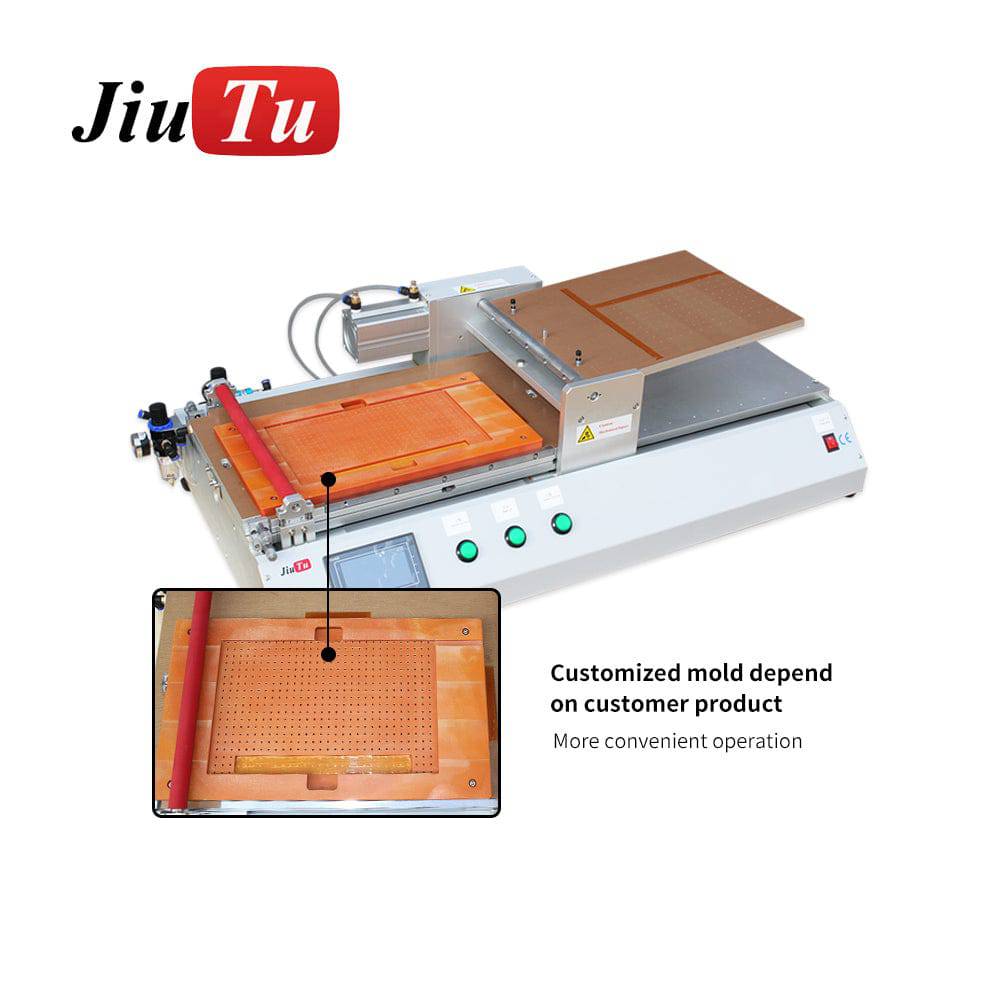 Compact laminators support repeatable positioning for smaller formats and quick changeovers.
Summary and practical next steps
Overall, LCD lamination succeeds when the workflow controls air, stress, and contamination together. Therefore, the best results come from stable preparation, repeatable alignment, and consistent vacuum-and-press timing. In addition, pairing the right fixtures and inspection conditions turns “good runs” into consistent output. As a final anchor, a well-chosen LCD Laminating Machine supports cleaner finishes when process discipline stays consistent.
Three actionable recommendations
-
First, standardize cleaning and inspection lighting before changing pressure or temperature settings.
-
Next, lock alignment with fixtures and log parameter changes with a clear reason.
-
Finally, add routine vacuum seal checks and platen verification to prevent slow drift.