 Skip to content


Large-screen debubbling looks simple from a distance. A panel goes in, pressure and heat do their work, and the glass comes out cleaner. On a real bench, it is never that neat. Big screens hold onto small process errors much longer than phone screens do. A slight tilt during loading, uneven support under the tray, or a chamber that feels just a little too tight can all show up later as edge haze, a returning corner bubble, or a panel that looked fine when warm and less convincing after it settled. That is why an air remover machine matters. Not because it adds one more step, but because it decides whether the final step is stable.
The most useful way to think about this equipment is not as a rescue tool. It is a finishing tool. Its job is to take a panel that is already close to right and make that result more complete, more even, and more repeatable. For teams handling tablets, notebook panels, vehicle displays, industrial modules, and larger bonded screens, chamber size becomes part of that logic. Too small, and the process starts feeling careful in the wrong way. Too large, and the workflow can become heavier than the actual job mix needs. The best fit usually sits in the middle: enough room for the real tray and support setup, without turning every job into a bigger production event than it has to be.
This article focuses on four things that matter in practice: the basic principle behind bubble removal on larger screens, the situations where this type of machine really earns its place, the judgment signs that tell whether it is time to buy, and the common assumptions that lead people the wrong way.
Contents
Why big screens are harder to debubble
On a smaller screen, a lot of imperfections stay local. A small corner issue tends to stay a small corner issue. Large panels behave differently. The bonded area is wider, the support demands are stricter, and the path from lamination to final inspection is less forgiving. That is why the same bubble pattern that looks manageable on a handset can become much more stubborn on a bigger module.
The reason is not mysterious. Air stays trapped where pressure distribution, support, or material contact was never fully even in the first place. On large screens, there is more area for that unevenness to hide in. Edge sections are more sensitive. Corners carry more stress. A tray that is slightly off level creates a bigger consequence because the whole panel responds to that bias. In simple terms, a bigger screen gives small process flaws more room to survive.
This is exactly where an air remover machine becomes important in the workflow. Its role is to help compress and eliminate residual trapped air after lamination, especially when the bond is already close but not yet visually clean. That sounds technical, but the practical meaning is straightforward: it turns a nearly finished result into a fully finished one. The key point, though, is this. It works best when the panel enters the chamber in a stable state. If the loading path is awkward or the support is weak, the machine is being asked to compensate for a problem that started earlier.
Big-screen debubbling is rarely about force alone. It is about whether the panel entered the chamber in a condition that pressure and heat can finish properly.
That is also why chamber size matters more than many first-time buyers expect. The chamber is not just a box that must be large enough to contain the panel. It is part of the handling environment. It affects how the tray enters, how naturally the screen settles, how much hand correction is needed during loading, and whether the process feels controlled from start to finish. A chamber can be technically large enough and still be a poor fit for real work if every larger panel enters under tension.

A large-screen chamber should support the whole movement of the job, not only the final cycle. Smooth entry and stable placement are part of the result.
Which situations this machine fits best
Not every repair line needs a dedicated large-format debubbling setup. The right fit usually appears when the screen mix starts changing in a visible way. A bench that once handled almost nothing but phones now sees tablets every day, notebook panels twice a week, and the occasional wider module that seems to slow everything around it. At first, people work around that change. Then the workaround becomes routine. That is usually the moment when the equipment question becomes real.
Mixed-format repair benches
When the job mix has moved beyond handheld devices and now includes tablets, notebook screens, or vehicle displays, an air remover machine starts making sense because the chamber needs to match more than one format without forcing every larger job into a careful, improvised loading routine.
Industrial and commercial display rework
For TFT, LCD, and wider bonded modules, chamber comfort becomes more important than speed alone. These jobs benefit from equipment that lets the panel enter and settle in a more natural way.
Workflows with stable lamination upstream
The machine is most valuable when lamination is already under control and the goal is better finishing, fewer visual returns, and a cleaner final inspection.
Lines where reruns are becoming normal
If the same display family keeps needing extra attention after debubbling, the bottleneck may not be a setting problem. It may be chamber fit, loading space, or support stability.
What matters in all these cases is not only size. It is frequency. When larger or wider jobs start shaping the week, the chamber becomes part of throughput, not just a backup tool. That is when a dedicated bubble removal machine begins to protect process rhythm in a way a smaller setup no longer can.
There is also a more subtle benefit that experienced teams usually notice first. The line becomes less person-dependent. A good chamber fit reduces the number of jobs that “only go smoothly when the most careful operator is here.” That kind of stability is easy to undervalue on paper and very easy to appreciate in daily production.

Wider panels usually reveal the value of the right chamber very quickly. The workflow looks calmer because the machine fits the work more honestly.
How to tell whether it is time to buy
The decision usually becomes clear before a formal failure ever happens. The signs are operational. Larger panels always take more concentration than they should. The tray fits, but not comfortably. A specific display type keeps producing “almost clean” results that need one more pass or one more inspection. These are not dramatic breakdowns. They are the quiet signs that the existing setup has become narrower than the real workload.
A useful way to judge this is to stop asking whether the machine can do the job and start asking whether the job feels repeatable. That shift is important. Many setups can technically process a larger panel. Fewer can do it in a way that stays smooth at 10 a.m. and still feels smooth at 5 p.m. after the bench has handled a full day of work.
Quick buying checklist
- Larger screens appear often enough to shape the weekly queue
- The current chamber can process them, but only with extra care during loading
- Results look acceptable at first glance and less convincing after cooling
- Only the most experienced operator gets truly consistent results on wider panels
- The upstream lamination stage is already steady enough to benefit from better finishing
One of the most reliable judgment methods is visual. Watch the loading motion, not just the output. Does the tray enter in one clean movement. Does the panel settle flat without a small correction. Does the operator’s posture look relaxed, or just careful. Skilled teams can read a chamber choice from those details almost immediately. A well-matched setup looks unforced.
Another useful sign appears during inspection. If a panel looks good straight out of the cycle but doubts begin showing up after it cools, the issue may not be pressure or time first. It may be that the bond entered the chamber with more stress than it seemed to have. In those cases, the machine choice and the loading environment deserve as much attention as the process recipe.
A more useful inquiry starts with the real job, not the catalog page
When comparing models, the most helpful information is usually very simple: the actual loaded rectangle, the tray or fixture outline, the weekly screen mix, and the current lamination setup. That gives Jiutu enough context to recommend a chamber based on workflow rather than guesswork.
Experience-based tips that make results more stable
Good equipment helps most when the daily habits around it are equally calm. For larger screens, three habits make an outsized difference. First, treat loading as part of quality control, not just part of preparation. If the panel enters under tension, the cycle is already being asked to work harder than it should. Second, judge results twice. The first look shows whether the finish is visually clean right away. The second look, after cooling, shows whether it is structurally honest. Third, protect the handoff between lamination and debubbling. The shorter and cleaner that transfer is, the more predictable the final result becomes.
These sound like small process habits, but they add up. Big screens magnify small inconsistencies. A process that feels “close enough” on smaller devices often feels noticeably less stable on a wider module. That is one reason experienced teams often say that large-panel work teaches discipline. It makes weak habits visible.
It also helps to think of the air remover machine as part of a sequence, not as a standalone hero machine. In a stable workflow, lamination creates the bond, the chamber finishes it, cooling reveals whether it held evenly, and final inspection confirms whether the result is truly ready. Once this sequence is understood clearly, equipment choices become easier. So do process decisions.
Common mistakes and false assumptions
Most buying mistakes in this category sound reasonable at first. They only become expensive later, when the line starts carrying extra tension that nobody meant to build into it.
- Assuming larger is always safer. A bigger chamber can help, but only when the real workload needs it. Oversizing without a clear reason can add footprint and complexity without improving the everyday mix.
- Buying by screen diagonal alone. The screen does not enter the chamber as a diagonal number. It enters with a tray, support, handling clearance, and an actual loading angle.
- Treating the chamber like a rescue step. If upstream lamination is unstable, the chamber may improve the appearance temporarily without making the result truly reliable.
- Reading “it fits” as “it fits well.” A panel that technically fits can still make every operator more careful than necessary. That tension shows up later in throughput and consistency.
- Trusting the first clean look too much. Warm results can flatter the process. Cooling tells the more useful truth.
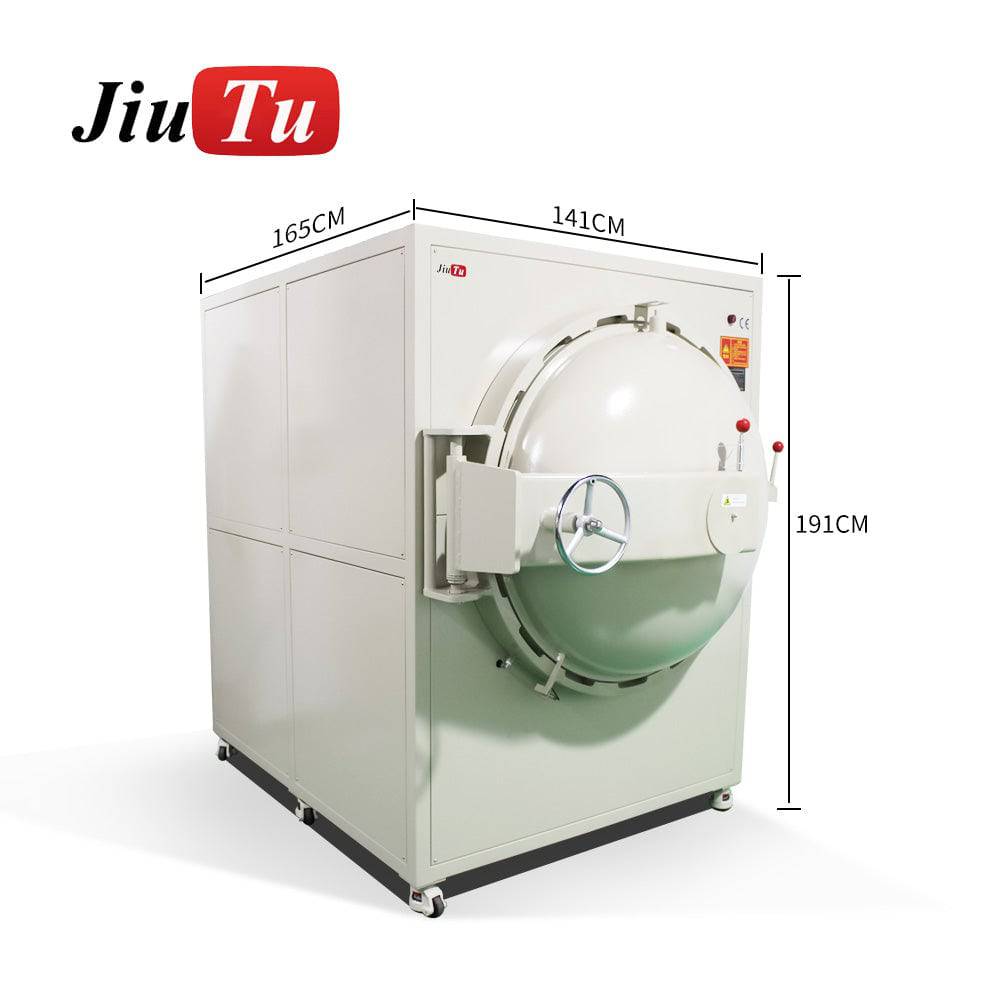
The best machine choice is usually the one that makes larger work feel normal, not the one that looks most aggressive on paper.
FAQ
Why are big screens more sensitive to chamber fit than phones?
Because a larger bonded area gives small process inconsistencies more room to remain visible. Support, edge behavior, and loading alignment all matter more on a wider panel than they do on a small handheld screen.
What is the clearest sign that the current chamber is already too small?
The clearest sign is behavioral. Larger jobs always slow the bench down, require extra care during loading, or become dependent on one especially experienced operator to stay consistent.
Does a larger chamber automatically improve results?
No. Results improve when the chamber matches the real work. If the machine is much larger than the daily job mix requires, it can make the workflow heavier without solving the actual bottleneck.
Can an airless bubble remover machine fix weak lamination upstream?
Not reliably. Whether the label used is airless bubble remover machine or air bubble remover machine, the role is still essentially the same: finishing a bond that is already close to correct, not fully rescuing one that entered the chamber with deeper process problems.
What information makes a recommendation request more accurate?
The most useful starting points are the real loaded dimensions, tray outline, screen mix, and current lamination setup. Those details are much more helpful than screen diagonal alone.
Need a chamber recommendation based on real use?
For quotation support, sample-machine advice, or a practical fit check, send Jiutu the actual loaded size, tray outline, and weekly screen mix. That usually leads to a much more useful recommendation than choosing by screen diagonal alone.