


A lot of screen assembly problems do not look dramatic at first. The panel goes down. The glass seems aligned. The surface looks clean under one light angle. Then half an hour later, or sometimes the next morning, a weak corner shows up, a faint line appears along the edge, or a bubble sits exactly where it always seems to sit. That is the moment when a led bonding machine starts to make sense. Not as a flashy upgrade. Not as a bigger box on the floor. It makes sense when repeated jobs begin to expose the same weak spots in loading, support, pressure, or finishing. In phone repair, display refurbishing, and industrial module assembly, that shift is easy to feel. The process stops being about getting one screen through. It becomes about getting the tenth screen through with the same calm result.
- What a bonding machine really changes on the bench
- When it makes sense, and when it probably does not
- What readers usually want to know first
- Core parameters, but explained in a practical way
- Process flow in real screen assembly work
- Use tips that actually help in daily work
- How to judge a machine before buying
- How it pairs with other equipment
- Buying advice for different work scenarios
- FAQ
- Related reading
What a bonding machine really changes on the bench
On paper, bonding sounds simple. Layers meet. Pressure is applied. The panel comes out. In real work, though, that description is too clean to be useful. The bonding step is where small handling habits become visible. A rushed transfer. A fixture that supports the middle well but leaves an edge slightly nervous. A panel family that always seems to need one extra finger movement right before contact. Those details are minor until they repeat. Then they stop being details and start shaping the whole day.
That is why a machine in this category is not just a press. It changes the mood of the process. A good setup makes loading feel obvious. The part settles instead of fighting the operator. The hand path becomes shorter. The inspection step becomes calmer because the output is not riding on small rescues. There is a big difference between a station that works when everything is perfect and a station that still works when the room is busy, someone asks a question, and the next panel is already waiting on the side table.
In phone repair shops, that change often shows up as fewer repeat attempts and less time spent staring at corners under harsh light. In screen refurbishing work, the gain is usually consistency. One panel starts looking like the next. In industrial display assembly, the change is even more obvious because larger surfaces amplify every weak habit. A panel that is slightly awkward to support at 7 inches can become exhausting at 12 inches or 15.6 inches.
So the real value is not abstract. It is physical. It is the moment when a process becomes easier to trust. A led bonding machine earns its place when the team spends less time compensating for the station and more time simply running the work.

A larger bonding platform usually starts to feel worthwhile when repeated jobs expose the same weak edge or corner behavior.
View ProductWhen it makes sense, and when it probably does not
Not every workflow needs to move up to a broader bonding platform right away. That matters, because overbuying creates its own kind of waste. If the daily work is mostly small phone screens, the process is stable, and the output target is modest, a compact setup can still be the smarter choice. It keeps the movement tight. It usually takes less floor space. It also matches the rhythm of a bench that wins on speed and repetition rather than on format range.
The answer changes when the work mix changes. More tablets. More edge models. More car displays. More industrial panels. More rework that has to hold up under stricter inspection. That is usually when the old process starts showing strain. It does not fail all at once. It becomes tiring. One panel needs extra care. The next one needs a slightly different hand position. An experienced technician can still get it through, but the station feels less honest than it used to.
A broader display led bonding machine makes sense in exactly that middle zone. Not when the work is still simple. Not only when the line is huge. It makes sense when the present setup can technically finish the job, yet the process no longer feels relaxed. That distinction matters. People often wait for a dramatic failure before they upgrade, but the more common signal is repeated friction.
There is a blunt way to say it. If the same panel family keeps asking for careful rescue moves, the line has already told the story. The question is not whether the screen can be bonded. The question is whether the current method is too fragile to stay efficient.
| Work pattern | Better-fit setup | Why it fits | Watch-out point |
|---|---|---|---|
| Mostly small phone glass refurbishing | Compact LCD repair machine | Keeps workflow short, simple, and fast | Less comfortable once panel mix becomes broader |
| Repeated mobile screen refurbishing with tighter appearance standards | Standard vacuum laminating setup | Improves repeatability and reduces awkward hand corrections | Still depends on good fixture design |
| Mixed work including tablets, car screens, and wider touch panels | Display led bonding machine | Better support area, calmer loading, easier mold logic | Needs realistic sampling with actual panel families |
| Industrial display module assembly | Panel bonding machine plus finishing step | More stable process for larger formats and appearance-sensitive output | Pairing and post-bond finishing matter just as much as the first press cycle |
What readers usually want to know first
Most people do not start by asking for the maximum force or the hottest temperature range. They start with a simpler question: will this make daily work less fussy? That is the right instinct. Parameters matter, of course, but the first layer of decision is more human than technical.
The first thing readers usually care about is stability. Can the process repeat cleanly across the morning and the afternoon? Can two different operators get similar output without one of them quietly saving every tricky run? If the answer is yes, the machine is already doing something valuable. It is not only laminating. It is making the workflow teachable.
The second thing is handling comfort. This gets ignored too often, maybe because it sounds soft. It is not soft. If the loading posture is awkward, if the landing point feels vague, or if the fixture keeps asking for tiny hand adjustments, output suffers. People get tired. Inspections get slower. Rework decisions become inconsistent because everyone is managing the station differently.
The third thing is whether the machine helps with the jobs that are genuinely annoying. Not the easy jobs. Easy jobs make anything look good. The real test is the screen that always catches a line of air on one long edge, or the panel that looks fine under overhead light but starts revealing defects under side light. That is the territory where a led bonding machine either proves itself or turns into another impressive-looking compromise.
And then there is rhythm. This may be the most important part. A useful station keeps the process moving without constant little recoveries. It does not ask everyone to develop secret techniques. It does not make success feel fragile. When readers say they want a machine that is “stable,” that is usually what they mean.
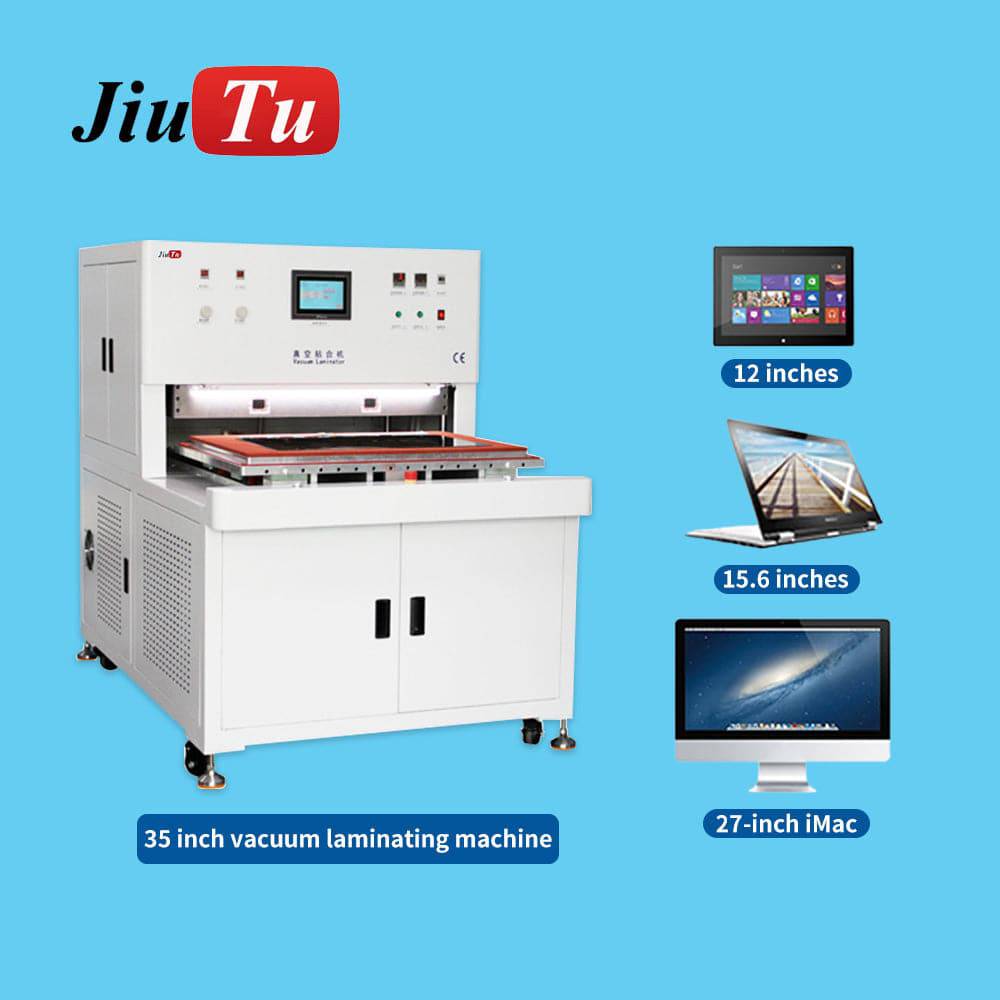
Broader-format laminating equipment becomes more useful when the workday includes tablets, car screens, and mixed display sizes.
View ProductCore parameters, but explained in a practical way
Specifications still matter. The problem is that they are often read in the wrong order. People look at the most dramatic number first and then build the whole decision around it. In daily bonding work, that can be misleading. A machine with stronger headline numbers can still feel worse on the bench if the support logic, heat behavior, or fixture fit is clumsy.
Vacuum stability
Vacuum gets talked about as if speed is everything. It is not. Fast pull-down looks nice in a demo, but stability is what protects appearance. The useful question is whether the machine holds the stage steadily through the cycle. If the hold is weak, the result often shows up later as faint edge defects or tiny bubbles that were not obvious in the first minute.
Pressure quality
Pressure is not just about force. It is also about how evenly that force reaches the part. If support is uneven, more pressure can actually make a weak area more obvious. This is why experienced teams often stop talking about “more” and start talking about “cleaner.” Cleaner contact. Cleaner landing. Cleaner support across corners and edges.
Heat behavior
Heat becomes more important as the panel area increases. A recipe that feels forgiving on a smaller screen may become much more demanding on a larger one. What matters here is not only the set value. It is whether the machine behaves consistently after several runs, not just on a cold start. A panel bonded at 9:05 a.m. and another one bonded at 2:40 p.m. should not feel like two different experiments.
Fixture logic
This is where many buying decisions become smarter. Alignment is not just about vision or operator skill. It is also about whether the fixture guides the screen in a way that feels natural. A good fixture reduces hesitation. A weak fixture creates a little moment of doubt every cycle. That doubt adds up fast, especially in a workshop where the same job repeats dozens of times.
Machine size versus useful size
Bigger is not automatically better. That point deserves repeating. The useful size of a station depends on real panel range, mold family, operator reach, and the surrounding bench layout. A machine can look generous in a catalog and still feel awkward once trays, tools, and movement paths are added around it. A good panel bonding machine is not the largest platform available. It is the one that matches the real work cell without forcing weird compromises around it.
Process flow in real screen assembly work
Process flow sounds formal, but on the bench it is really just the order of small moments. A screen assembly line feels strong when those moments are short, predictable, and easy to repeat. It feels weak when everyone has to improvise the middle.
1. Surface prep
This step is ordinary, which is exactly why it gets rushed. A small speck or haze mark can survive the first glance and then become a much bigger annoyance after bonding. In practice, the cleaner and calmer the prep area is, the less emotional the inspection step becomes later. Good prep removes arguments before they start.
2. Staging and dry fit
The dry fit often tells the truth early. If the part sits confidently in the fixture, that is a good sign. If the panel still looks like it is being persuaded into place, the process is already asking for help. This is one of those quiet moments that experienced people notice in five seconds. It predicts a lot.
3. Loading into the bonding stage
Loading should feel controlled, not tense. A strong station gives the hands a clear path. The panel lands in a way that feels guided. If loading always requires one cautious twist, one extra pause, or one hidden trick, the machine is not really settling the work. It is merely allowing the work.
4. Bonding cycle
This is where vacuum, pressure, and heat do their obvious job. Yet the experience on the bench is still more revealing than the theory. A good cycle feels boring in the best way. It does not surprise anyone. The part comes through without drama. That may sound simple, but boring consistency is exactly what most teams want once daily volume grows.
5. Rest and check
This step is often the difference between confidence and wishful thinking. A screen that looks perfect immediately is not always finished telling the truth. A short rest, then a side-light inspection, catches a lot of problems while they are still manageable. It is one extra pause, but it saves many avoidable disappointments later.
6. Post-bond finishing when needed
Larger or more appearance-sensitive jobs often benefit from a finishing step after the first bonding cycle. That is especially true once the work moves beyond simple phone-screen repetition. The point is not to make the process complicated. The point is to separate two jobs that are not exactly the same: building the stack, and settling the final appearance.
Use tips that actually help in daily work
The most helpful use tips are rarely complicated. Usually they are the habits that make the process less fragile. They shorten transfer time, reduce hesitation, and keep the station from becoming dependent on one person’s instincts.
First, shorten the path between cleaning, staging, and loading. If a prepared panel waits too long while the next action gets sorted out, the whole workflow starts feeling sloppy. Even a clean machine cannot fully compensate for an untidy handoff.
Second, inspect corners first. People naturally look at the center because it feels reassuring. The center often looks fine. Corners are less polite. They show whether support and contact were really under control. Checking corners first saves time and tells a more honest story.
Third, avoid changing settings too quickly after one imperfect panel. This is a common trap. A weak edge appears, so the recipe changes. Then the next panel looks different for another reason, and the recipe changes again. Before long, nobody knows what the baseline is. Often the real issue is handling or fixture seating, not the setting itself.
Fourth, keep mold changes simple and repeatable. If every fixture swap feels like a new conversation, the station will always struggle in mixed-format work. Good tooling does not just hold the panel. It also makes the next cycle easier to start with confidence.
Fifth, pay attention to the room, not just the machine. This sounds obvious, but it matters. Lighting, bench crowding, compressed air stability, and how many unfinished parts are sitting nearby all shape the way people use the station. A clean process lives in a clean environment.
Finally, use the right class of machine for the real job. A compact LCD repair machine is still a practical fit when smaller phone-screen work dominates the day. A broader led bonding machine becomes more useful when the line needs more support area, more flexible mold logic, and less awkward handling across mixed display sizes.
Quick checklist before a sample run
- Use a real panel, not an easier substitute.
- Keep the transfer path short and clean.
- Check dry fit confidence before the first cycle.
- Inspect corners and long edges before the center.
- Let the panel rest briefly before the final judgment.
- Notice whether the fixture change feels smooth or fussy.
- Watch operator posture and hand movement, not only the display result.
How to judge a machine before buying
A lot of buying mistakes happen because the machine is judged in the friendliest possible conditions. One clean sample. One easy panel. One careful operator. That kind of test can make almost anything look reasonable. A better evaluation is a little harsher and much more useful.
Start with the actual panel family that shows up most often, not the most convenient one available for a demo. If the difficult screen is the one that keeps causing trouble in production, that is the one the machine needs to face. Otherwise the test becomes a sales moment rather than a process decision.
Then watch the loading moment closely. There is a lot of truth in those two or three seconds. Does the panel settle naturally, or does it still need a careful nudge? Are the fingers working with the fixture, or around it? A good machine reduces awkwardness immediately. If it does not, the problem usually gets louder with repetition.
Next, repeat the test enough times to create patterns. One pass is not enough. Five is better. Ten is better still. Real problems become visible through repetition. Maybe the first part looks great and the fourth one begins showing slight edge inconsistency. Maybe the warm machine behaves differently from the cold one. That is not bad news. That is useful truth.
Also, do not judge only the fresh result. A panel that looks clean immediately can still disappoint after a short rest. This is especially important in work that cares about finish quality under different light conditions. A machine should be judged by what the screen looks like after the process has settled, not only by the first clean impression.
One more sign deserves attention: whether the demonstration depends on one unusually skilled person. If success seems tied to hidden timing or tiny rescue motions, that is a warning. The right led bonding machine should reduce dependence on silent heroics. That is part of what makes it worth buying.
How it pairs with other equipment
Bonding rarely succeeds by itself. It succeeds because the stations around it are compatible. Surface prep, staging, fixture storage, post-bond finishing, and inspection either support the machine or quietly weaken it. That is why pairing matters.
In smaller repair workflows, a compact integrated route keeps things efficient. The movement is short. The footprint is controlled. The process remains easy to understand. That is one reason why a smaller laminating-and-debubbling path continues to work well for many phone-focused rooms.
As panel size and appearance requirements increase, though, the finishing stage deserves more respect. It is common for larger assemblies to look acceptable after the first cycle and then reveal faint trouble later. That is where a separate finishing or bubble-removal step helps. It is not about adding drama to the workflow. It is about giving the final appearance its own stable stage.
In other words, a good panel bonding machine should be judged as part of a small production cell, not as a lonely purchase. If the bonding stage looks fine but the final inspection still feels nervous, the setup is only half solved.
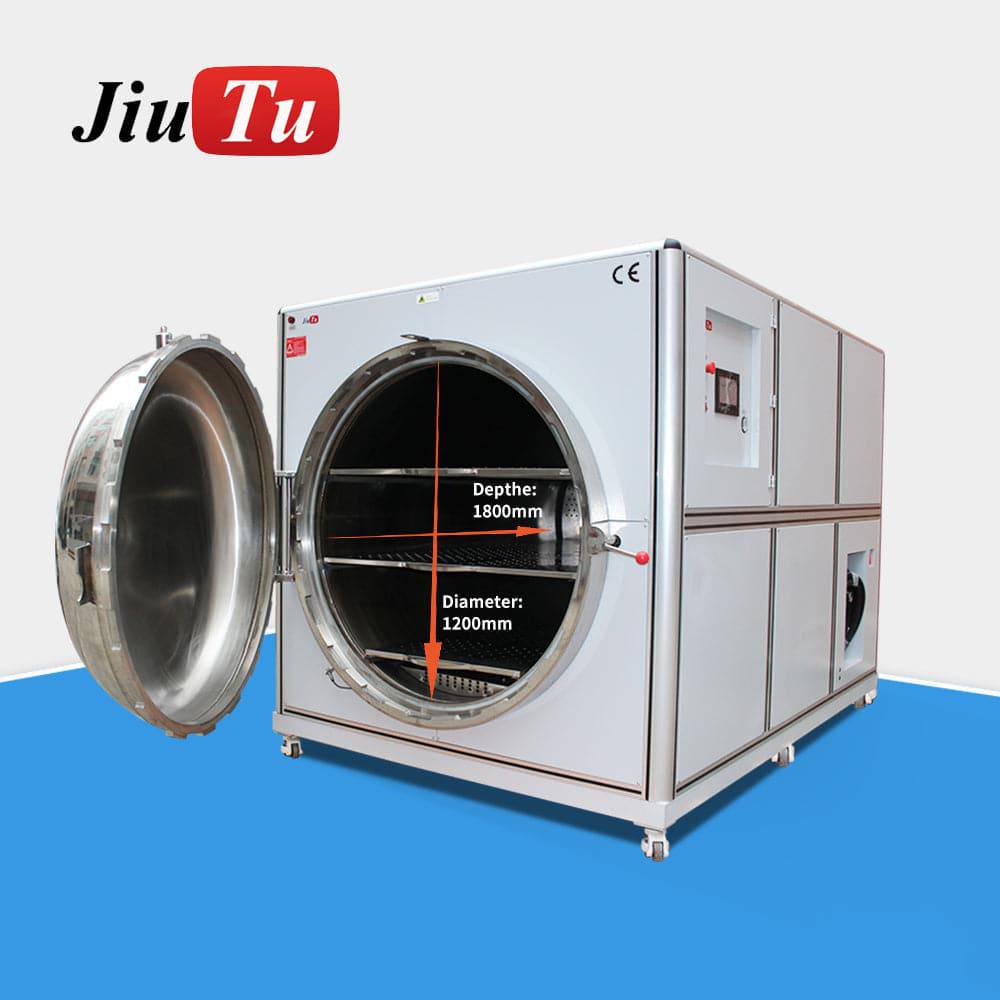
For larger display work, finishing equipment often matters just as much as the first bonding cycle.
View ProductBuying advice for different work scenarios
Phone repair and glass refurbishing benches
If the workday is still dominated by smaller phone screens, a compact route often stays more sensible. The biggest advantage here is not only size. It is speed with less clutter. The room stays easier to organize. The process stays easier to teach. For workshops that rely on fast turnover and a tight bench layout, that matters more than owning a larger machine that does not really fit the daily rhythm.
Mixed-format refurbishing shops
This is where the decision gets interesting. A shop that handles phones in the morning, a few tablets after lunch, then a car display in the late afternoon is already living in a different world from a phone-only bench. The setup needs more support area and better mold logic because the line is switching tasks more often. In that environment, a display led bonding machine usually starts paying back through smoother handling and fewer unstable runs.
Industrial display module purchasing
Industrial work needs a stricter buying lens. The question is not just whether the machine can bond the panel. The question is whether the line can keep doing it with stable appearance, realistic fixture changeovers, and a process that still feels organized after repeated cycles. Larger displays are less forgiving. A weak support pattern or an awkward loading path becomes visible quickly.
One mistake to avoid
The most common mistake is buying around catalog ambition instead of around actual workload. It is tempting to plan for every possible future scenario. Usually that leads to a setup that is less comfortable for the work happening right now. A better path is to buy for the dominant panel family, the true bench layout, and the real output rhythm. Then leave room to scale with better pairing, better fixtures, or a second station if needed.
A better buying mindset
Buy the machine that settles the process, not the machine that looks strongest in isolation. That sentence sounds simple, but it avoids a lot of regret. A good purchase makes the workflow quieter. Fewer repeated edge checks. Fewer improvised hand movements. Fewer moments where the result depends on who happened to run the job. That is what a good led bonding machine is supposed to do.
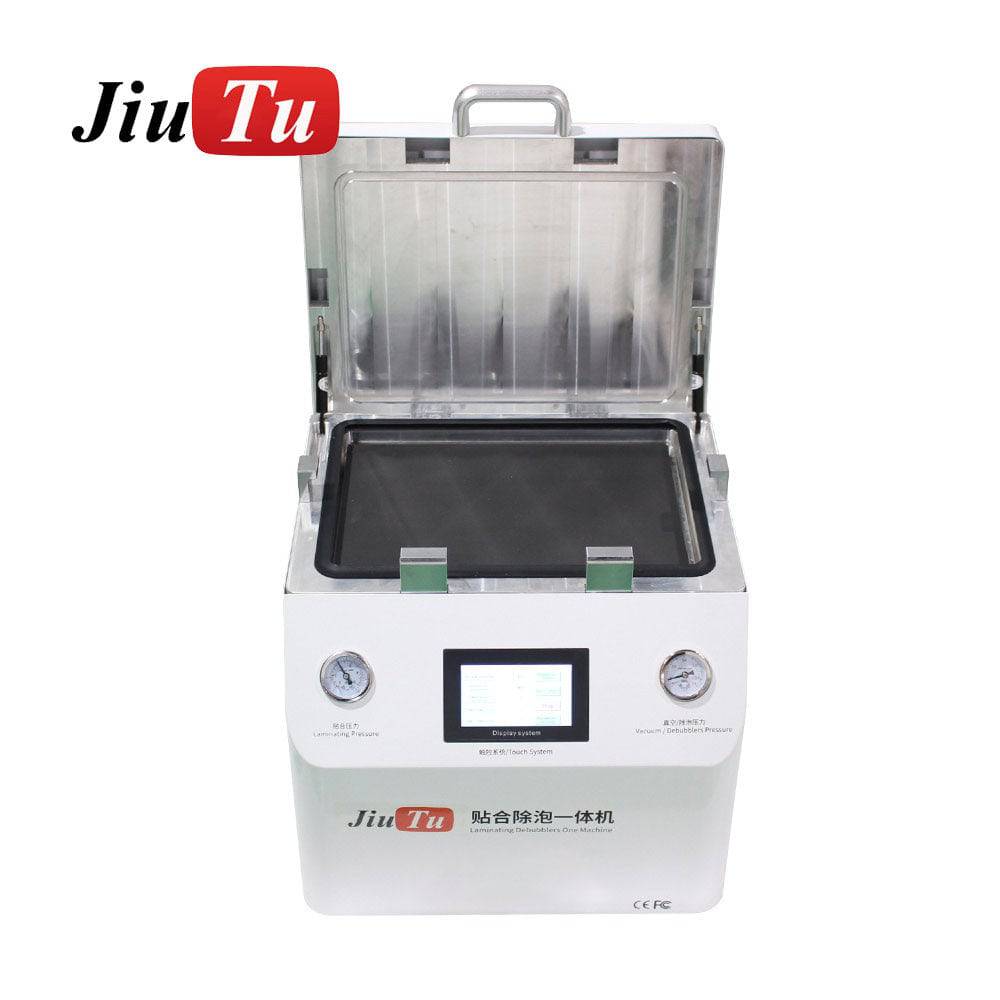
Compact integrated machines still make sense when smaller phone-screen work takes up most of the day.
Browse CollectionNeed a quote, sample-machine suggestion, or a matching plan?
Share the screen size range, adhesive structure, and daily workflow. That makes it much easier to match the right setup, whether the work needs a compact repair station, a broader bonding platform, or a paired finishing solution.
Three practical next steps
- Prepare one real panel family for evaluation, not the easiest sample available.
- List the actual sizes and job types that appear most often each week.
- Ask for matching advice based on workflow fit, fixture needs, and finishing logic.