

A repair bench often looks quiet until a fine flex cable refuses to sit straight. The screen lights up, then one line flickers across the panel. In that moment, an LCD flex bonding machine is not just another tool on the table. It is the difference between guessing by hand and controlling heat, pressure, alignment, and timing with a calmer process.
However, ACF bonding solves a slightly different problem. It deals with conductive film, narrow pads, FPC or FFC cable contact, and reliable electrical connection. So this article does not simply compare two machine names. Instead, it explains where each machine makes sense, what work feels like in real repair scenes, and how to judge the right fit before money and time are wasted.
Quick Answer: The Difference Is Not Just the Machine Name
In simple terms, an LCD flex bonding machine is usually the better fit when the main job is phone display flex cable repair. For example, a screen may show vertical lines after glass separation, or a touch cable may lift slightly after a previous repair. In that small contact area, alignment and steady pressure decide whether the screen returns to normal or becomes scrap.
Meanwhile, an ACF bonding machine fits work that depends on ACF film. ACF means Anisotropic Conductive Film, a thin film that creates vertical electrical contact when heat and pressure are applied. In practice, this matters for FPC, FFC, chip, and panel connector work where the pad pitch is tight and the electrical path needs better control.
Therefore, the clearer question is not “Which machine is stronger?” The better question is “What connection must be restored?” If the fault sits around a phone display flex or COF line, flex bonding is often the direct route. If the job needs conductive film between cable and panel, ACF bonding is usually the safer process.
Applicable Scenarios Compared: Where Each Machine Feels Natural
A machine feels “right” when it matches the fault seen under the microscope. On a phone repair desk, the work may begin with a display that still lights up but shows one bright line near the edge. The panel is not completely dead. Still, the flex connection is weak enough to make the whole repair uncertain.
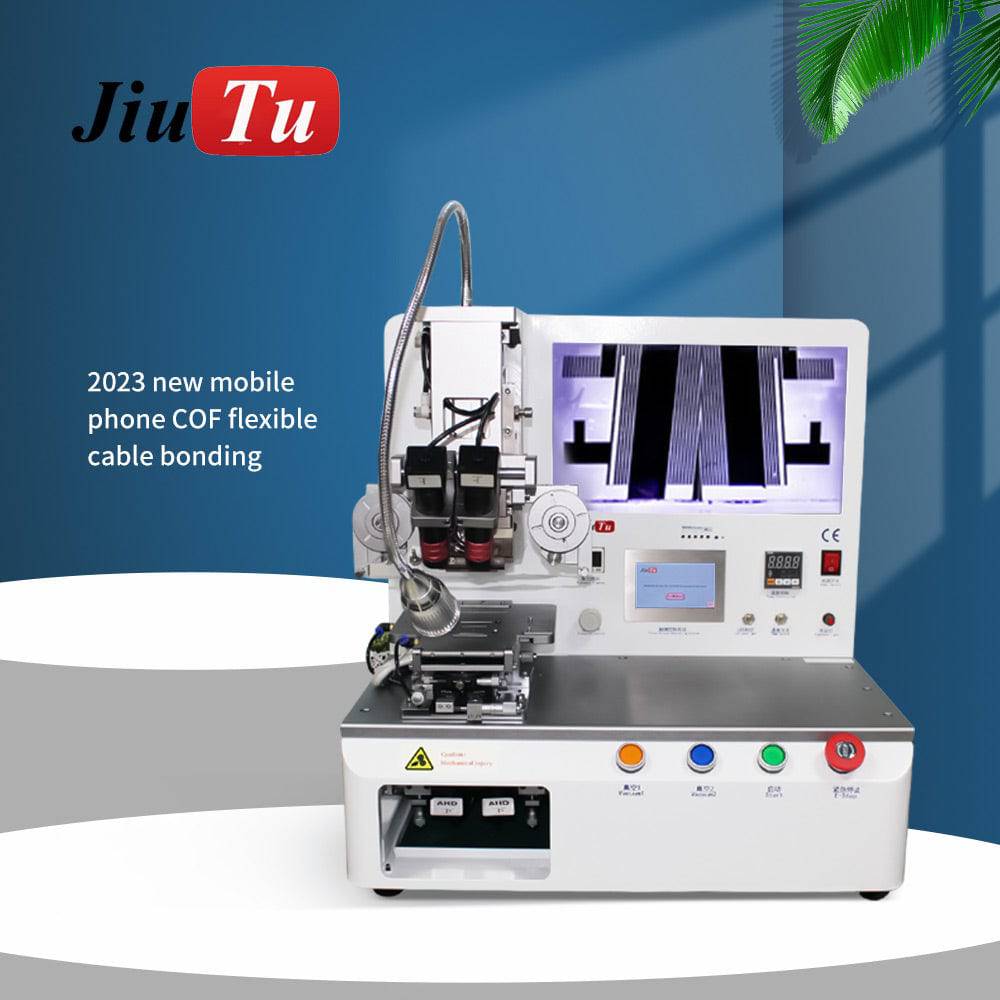
In that situation, the LCD flex bonding machine has a clear role. It gives the operator a stable platform, a viewing path, and controlled bonding pressure. Instead of pressing the cable by hand and hoping the line disappears, the process becomes slower, cleaner, and easier to repeat.
When Flex Bonding Fits the Work
Flex bonding fits phone display repair, COF cable repair, FPC repair, and screen refurbishment work where a thin cable must reconnect to a contact area. For example, after glass separation, the screen may look fine at first glance. However, the cable area can lift by a tiny amount, and that small gap is enough to create unstable touch or display lines.
Also, flex bonding fits benches that handle repeated screen faults across phone models. The action is usually familiar: clean the contact area, set the cable, align the lines under magnification, apply heat and pressure, let the part cool, then test. The value comes from repeatable movement, not from dramatic speed.
When ACF Bonding Fits the Work
ACF bonding fits jobs where the connection itself depends on conductive film. For instance, an FPC cable may need to bond to a display panel contact area, or an FFC cable may need a stable electrical path on a small module. Here, the film is not decoration. It is part of the connection.
In this kind of work, heat, pressure, and time must work together. The ACF particles need enough compression to create vertical conduction, yet the process must avoid sideways shorting between close pads. That is why ACF bonding often feels more like process control than simple cable repair.
A Practical Comparison Table
| Comparison Point | LCD Flex Bonding Machine | ACF Bonding Machine |
|---|---|---|
| Main task | COF, FPC, and flex cable repair on display screens | ACF film bonding for FPC, FFC, chip, or panel connectors |
| Best scene | Phone screen lines, touch failure, lifted flex area | Connector bonding, display module samples, FPC/FFC process work |
| Main skill | Clean alignment and careful cable seating | Film handling, pressure balance, and recipe control |
| Common risk | Cable shift, weak contact, screen damage from uneven pressure | Open circuit, short risk, poor particle compression |
| Decision clue | The repair target is a display flex fault | The process requires ACF film to form the electrical contact |
How an LCD Flex Bonding Machine Fits Daily Display Repair Work
A spec sheet rarely shows the nervous part of display repair. At 3 p.m., after several screen jobs, a technician may place a repaired panel on the tester and see one thin line appear again. The line is not dramatic. Still, it means the bond is not stable enough.
In flex repair, that failure often comes from tiny movement during cable seating. The cable edge looks aligned from above, but under the camera the pad line may be slightly off. Therefore, the machine must help the operator slow down at the exact moment that matters.
Scene 1: A Phone Screen Shows Lines After Separation
After glass separation and cleaning, a screen may pass a quick display test. Then, after light handling, one line returns near the edge. This is a common moment in refurbishment work because the screen has already been heated, separated, cleaned, and handled more than once.
Here, the LCD flex bonding machine makes sense because the main problem is physical contact at the flex area. The operator needs a steady stage, clear viewing, and a bonding head that presses evenly. The goal is not to “force” the screen back. The goal is to restore contact without adding new stress.
Scene 2: An FPC or FFC Connector Needs ACF Film
In a module sample room, the part may be smaller than a phone screen but more demanding. The cable may be a narrow FPC or FFC connector with close contact pads. A quick press will not be enough because the connection depends on ACF film behaviour.
In this scene, the ACF bonding machine is more suitable. The process needs film placement, temperature control, pressure balance, and enough bonding time. Moreover, the result should be checked electrically, not only visually, because a neat-looking bond can still have weak contact.
Scene 3: A Mixed Workbench Handles Both Repair and Testing
Some benches handle a mixed workload. In the morning, there may be two phone screens with flex faults. Later, a small display sample may arrive with an FPC connection issue. This is where machine choice becomes less obvious.
In that case, the work ratio should decide the priority. If most income comes from phone display flex faults, flex bonding should lead. However, if ACF film jobs appear weekly and affect project approval, ACF bonding capability deserves serious attention.
Core Parameter Differences: Which Numbers Actually Affect Repair Quality
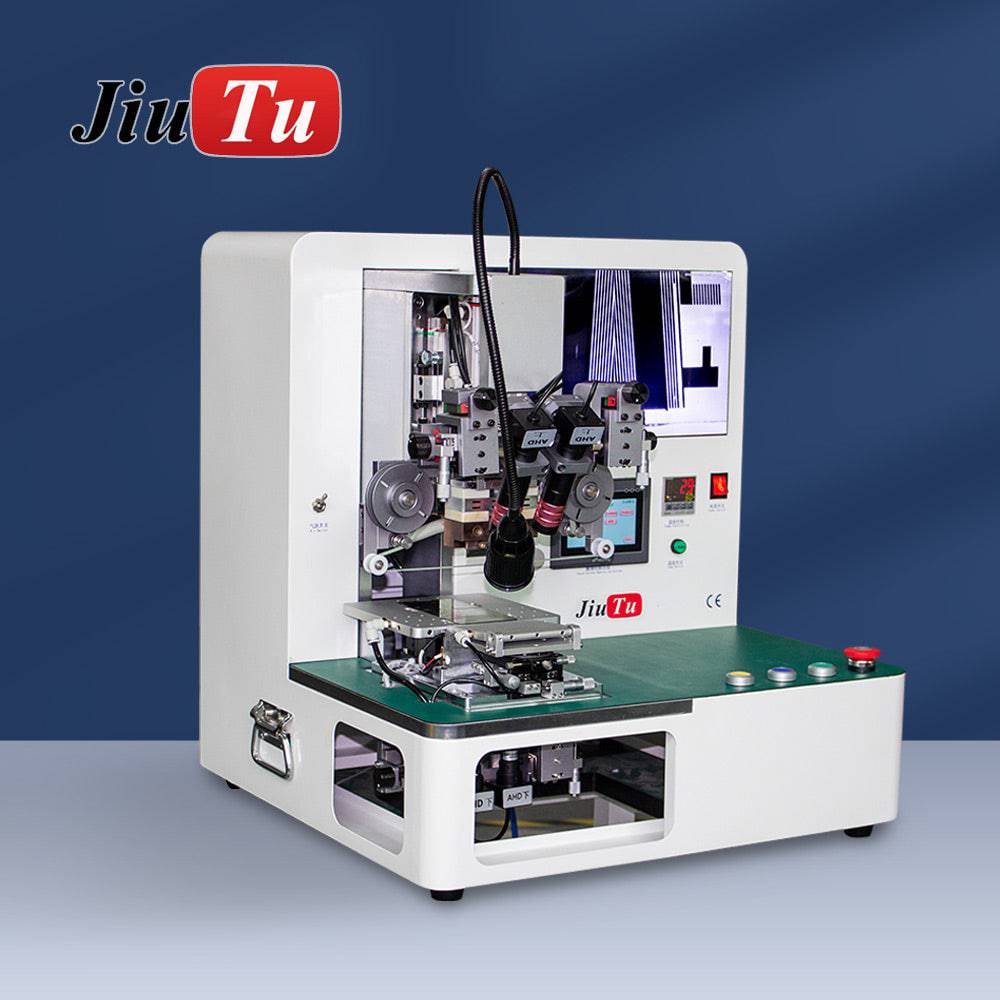
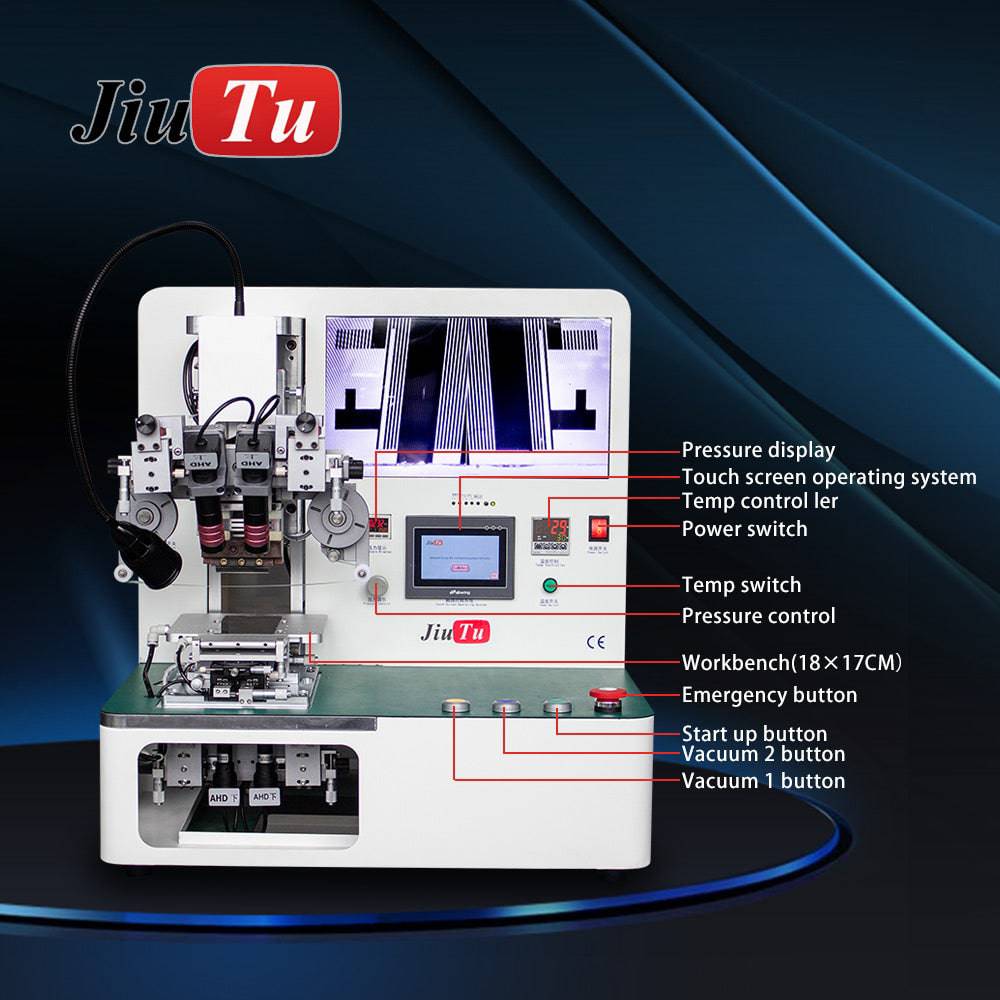
Parameters can be useful, but only when they explain real results. Temperature, pressure, workbench size, camera position, and bonding head shape matter because they affect what happens under the lens. A long list of numbers does not help if the cable still shifts during bonding.
Therefore, the better habit is to connect every parameter to a visible repair risk. Heat affects adhesive and film behaviour. Pressure affects contact quality. Alignment affects whether the pad meets the correct line. Fixture support affects whether the screen stays still when the head comes down.
Heating Method: Stable Heat vs Process Heat
For flex repair, heat should be stable and controlled. The repair target is usually a local cable area, so overheating nearby layers can create fresh trouble. A steady process helps the operator bond the cable without turning a small fault into a damaged panel.
Meanwhile, ACF work depends on the behaviour of conductive film. The film needs proper activation under pressure and heat. If the heat is too weak, contact may fail. If it is too aggressive, the film or nearby material may suffer.
Pressure: The Setting That Quietly Creates Rework
Pressure is easy to misunderstand. More pressure does not automatically mean a stronger repair. In fact, too much pressure can crush a cable edge, mark the panel, or stress the contact area.
For flex bonding, even pressure across the bonding head is more important than a large number. For ACF bonding, pressure must compress the conductive particles properly without pushing the connection sideways. In both cases, a small pressure mistake may not show at once, but it can appear during final testing.
Alignment View: The Part That Reduces Hand Guessing
A good camera view changes the pace of work. Instead of leaning closer and guessing from a weak angle, the operator can see the pad edge and cable line before bonding. This is especially useful after a long morning, when small fatigue can become a failed screen.
For FPC and FFC bonding, the viewing system also supports electrical reliability. A cable can look neat from far away while sitting slightly off the contact area. Under magnification, that mistake becomes easier to catch before heat and pressure lock it in.
Workbench and Fixture: The Hidden Reason Some Repairs Feel Difficult
Workbench size is not only about whether a screen physically fits. It also affects hand movement, cable access, and fixture stability. If the part sits awkwardly, alignment becomes harder than it should be.
In practice, a fixture should hold the part steady without blocking the cable area. Also, it should allow quick inspection after bonding. When the fixture is right, the operator spends less time fighting the setup and more time checking the actual contact.
Cost and Yield Comparison: The Real Cost Is Failed Screens, Not Only Machine Price
A machine price is visible on day one. Failed panels become visible after a week of work. That is why cost should be judged by saved screens, lower rework, shorter training time, and fewer uncertain repairs.
For example, one high-value phone display that fails after repair can erase the savings from choosing the wrong setup. Meanwhile, a module sample that fails because the ACF recipe is unstable can delay testing for several days. So cost is really about control.
Where Flex Bonding Saves Cost
Flex bonding saves cost when a screen is still worth recovering. A phone panel with a cable issue may not need full replacement if the contact can be restored cleanly. Therefore, an LCD flex bonding machine can protect panel value during screen refurbishment and repeated repair work.
Also, it reduces emotional pressure on the bench. A technician can work through a known sequence instead of improvising with each screen. That may sound small, but calm routine often protects yield better than speed.
Where ACF Bonding Protects Yield
ACF bonding protects yield when electrical contact depends on film compression. A visually clean bond can still fail if the particles do not form a stable path. Therefore, the process needs careful settings and repeatable contact pressure.
In sample work, this matters even more. A failed connector can make the whole module look unreliable, although the panel itself may be fine. With the right ACF setup, testing becomes more controlled and less dependent on trial-and-error.
Labour Time Also Belongs in the Cost
Labour cost often hides inside slow alignment. If one screen takes several extra minutes because the cable keeps moving, the bench loses rhythm. More importantly, the operator may rush the final test to catch up.
A better machine setup reduces that friction. It does not remove skill, and it should not promise magic. However, it gives the repair team a cleaner path from inspection to bonding to final test.
Selection Standards: Start From the Fault, Not the Product Name
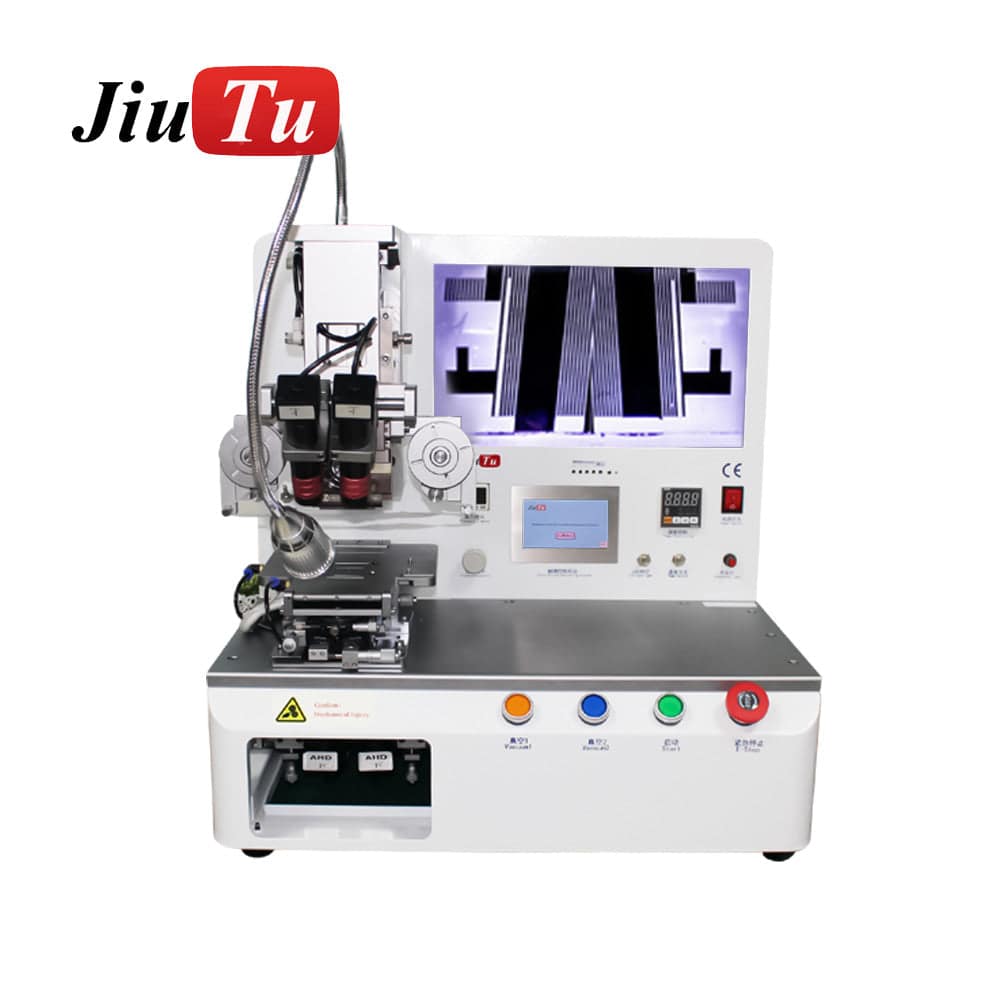
A common mistake is choosing by machine label first. The better method is to look at the faulty area and ask what connection must be rebuilt. When comparing an LCD flex bonding machine with an ACF bonding machine, this fault-first method keeps the decision practical.
However, if the work needs ACF film between cable and panel, the ACF bonding path is more logical. The film, contact pads, pressure curve, and heating method become part of the result. In that case, a general pressing mindset is not enough.
Question 1: What Is the Actual Fault?
If the screen has vertical lines, missing touch, or unstable display after cable handling, the fault may sit in the flex connection. Still, inspection should come before bonding. A damaged pad cannot be fixed by pressure alone.
Therefore, the first step is checking the cable edge, pad area, residue, and tear marks under magnification. If the contact area is physically damaged, the repair plan must change. If the area is intact but lifted or weak, bonding becomes more realistic.
Question 2: Is ACF Film Part of the Process?
If ACF film is required, the machine must support that process. The film needs clean placement, controlled pressure, and suitable heat. Also, the contact should be tested after bonding because the failure may not be visible from the surface.
For FPC FFC bonding machine decisions, this question is very practical. The same cable shape can appear in different process routes. One route may need simple flex repair, while another needs ACF film and process testing.
Question 3: What Work Appears Most Often?
A machine should match the work that appears every week, not the rare job that appears once a season. If most repairs involve phone display flex faults, the flex bonding route deserves priority. If sample connectors and ACF film work appear often, ACF bonding deserves more attention.
This is a practical way to avoid overbuying or underbuying. A repair bench does not need a complicated setup for a simple repeated fault. Meanwhile, a module testing room should not rely on a machine that cannot control the film process properly.
Question 4: Can More Than One Person Run the Process?
A fragile workflow depends on one experienced person. When that person is away, the pass rate drops. Therefore, the machine and process should be understandable enough for trained operators to follow.
Clear controls, camera visibility, repeatable fixtures, and written settings help. They do not replace skill, but they reduce avoidable mistakes. Over time, that makes the repair room less stressful and more predictable.
Practical Use Tips: A Cleaner Workflow From Inspection to Test
Good bonding is often boring in the best way. The part is cleaned, the cable is aligned, the setting is recorded, the bond cools, and the screen is tested. When this rhythm becomes normal, rework drops.
Still, many failures come from rushing one small step. A cable is moved too soon after bonding. A pad area is cleaned quickly but not completely. A setting is changed without a note. These tiny shortcuts create confusing results later.
Step 1: Inspect Before Cleaning
Before any bonding starts, the fault area should be inspected. Look for broken pads, torn cable edges, old adhesive, burn marks, and uneven contact. If the physical structure is already damaged, bonding may not solve the problem.
This step saves time. It prevents the repair bench from spending 20 minutes on a screen that cannot pass because the contact point is gone. Also, it helps choose between flex bonding and ACF bonding with less guesswork.
Step 2: Clean Slowly, Then Check Again
Cleaning is easy to rush because it feels like preparation, not the main job. However, residue can block contact and create weak spots. A screen can pass at first, then fail after light cable movement.
Therefore, cleaning should be treated as part of bonding quality. After cleaning, check the pad area again under magnification. If there is still residue, the next step should wait.
Step 3: Align With the Camera, Not With Hope
The camera view should be used before the bonding head moves down. That sounds obvious, but on a busy bench it is easy to trust hand feeling. A half-line shift may not look serious until the display test fails.
For ACF work, alignment also affects electrical contact. If the pad and cable do not meet correctly, the film cannot create reliable conduction. The camera is not only for comfort. It protects the contact path.
Step 4: Change One Setting at a Time
When a bond fails, it is tempting to change temperature, pressure, and time all at once. That creates a new problem: the next result may improve, but the reason stays unclear. A cleaner approach is to change one setting and record the result.
A small notebook near the machine can work well. Write the part model, cable type, setting, cooling time, and test result. After several samples, patterns become easier to see.
Step 5: Let the Bond Cool Before Handling
A freshly bonded cable should not be pulled or bent too soon. The connection needs time to settle after heat and pressure. Moving the cable immediately can weaken the area before the final test even starts.
After cooling, test the display, touch function, and cable stability where safe. If the same line fault returns after gentle movement, the issue may be alignment, pressure, contact cleanliness, or film behaviour.
Pre-Selection Checklist: Check These Before Choosing a Machine
Before choosing between flex bonding and ACF bonding, a short checklist can prevent a wrong match. This list works best when real sample parts are on the desk, not only photos in a message.
- Confirm whether the main fault is a display flex cable issue, an FPC/FFC connection, or a chip bonding process.
- Check whether ACF film is required for the electrical connection.
- Prepare clear photos of the pad area, cable edge, and failed display result.
- Measure the cable width and check whether the bonding head fits the contact area.
- Test whether the fixture can hold the part without blocking the working area.
- Review camera clarity under normal bench lighting, not only under ideal photos.
- Use 3 to 5 real samples for trial bonding before fixing the process.
- Record temperature, pressure, time, cooling time, and final test result.
- Check whether more than one trained operator can repeat the same result.
- Ask Jiutu for model advice if the cable type or film process is not clear.
Common Mistakes That Make Bonding Results Unstable
Most bonding problems are not dramatic. They are small and repetitive. A slightly dirty pad, a loose fixture, a rushed cooling step, or a pressure setting changed without notes can create the same failure again and again.
Therefore, process discipline matters as much as machine choice. A good machine helps, but it cannot rescue a careless workflow. The best results usually come from simple steps done the same way each time.
Mistake 1: Treating Every Line Fault as a Bonding Fault
A display line may come from a flex issue, but it may also come from panel damage or IC trouble. If the diagnosis is wrong, bonding only wastes time. So the first inspection should decide whether the contact area is actually repairable.
For example, if the pad is missing, pressure cannot rebuild it. If the cable is torn beyond the contact area, a clean bond may still fail. This is why visual inspection should always happen before machine setup.
Mistake 2: Chasing Higher Heat
Higher heat can feel like a shortcut, but it often creates new problems. Nearby layers may soften, adhesive may move, or the cable may deform. A controlled setting is safer than an aggressive setting.
For ACF work, heat must match film behaviour. The goal is stable particle contact, not brute force. For flex repair, the goal is contact recovery without extra panel stress.
Mistake 3: Skipping the Post-Bond Test
A screen that lights up once has not fully passed. It should be checked after cooling, after light cable movement where safe, and after normal display testing. This extra minute catches weak contact before the repair leaves the bench.
In ACF work, electrical testing is even more important. A bond can look clean while still producing unstable contact. Testing should close the process, not sit outside it.
FAQ
Is an LCD flex bonding machine the same as an ACF bonding machine?
No. They can appear in similar display repair environments, but the process focus is different. Flex bonding usually handles phone display flex cable or COF repair. ACF bonding handles connections that depend on Anisotropic Conductive Film, such as FPC, FFC, chip, or panel connector bonding.
When should flex bonding be chosen first?
Flex bonding should be reviewed first when the visible fault sits around a phone display flex cable, COF area, or screen line contact. For example, vertical lines, unstable touch, or a lifted cable after screen work often point toward this process. Inspection still matters because damaged pads may need a different solution.
When is ACF bonding necessary?
ACF bonding is necessary when the electrical connection depends on conductive particles inside ACF film. This often appears in FPC, FFC, chip, and panel connector work. The process needs suitable heat, pressure, time, and alignment because the finished contact may fail even when the surface looks neat.
What affects bonding yield the most?
Alignment, cleanliness, pressure, heat, and cooling all affect yield. However, alignment and cleaning often cause the fastest visible failures. A cable that sits slightly off line may fail even with good heat. Residue on the pad area can also create weak contact after testing.
What details should be sent before asking for a machine recommendation?
Useful details include clear photos of the screen fault, cable area, pad area, cable width, part size, expected repair type, and whether ACF film is used. Real samples or short test videos also help. With those details, Jiutu can suggest a quotation, sample-machine direction, or adaptation plan with fewer delays.
Final Takeaway
The right machine choice starts with the connection being repaired. If the job is phone display flex, COF, or screen line recovery, an LCD flex bonding machine is usually the more direct fit. If the work depends on ACF film, FPC or FFC bonding, or repeatable connector contact, the ACF bonding process deserves priority.
For a safer decision, prepare real part details before asking for a recommendation. Send Jiutu three clear things: a photo of the failed display, a close-up of the flex or connector area, and the cable width or part size. With those details, Jiutu can judge whether flex bonding or ACF bonding is the better route, then suggest a quotation, sample-machine direction, or adaptation plan without unnecessary back-and-forth.
- Prepare clear photos of the flex cable, pad area, and display fault before requesting a quote.
- Test real sample parts and record settings before building a repeated repair process.
- Choose flex bonding for display flex faults and ACF bonding for film-based electrical contact work.